Gold Jimiki Design and South Indian Gold Jewellery Gallery
This gold jimiki design gallery opens our South Indian collection, with each piece an original idea you can show to your jeweller. You will also find kammal, kasu malai, thali chains, kanthi, vanki and mani chains.
South Indian gold often uses temple arches, mango motifs, kemp-look stones and coins. Each picture shows an approximate weight, karat and a note to help you order.
For North Indian bell shapes, see our gold jhumka designs. Other regional styles are in Bengali gold jewellery and Rajputi gold jewellery.
Gold Jimiki Design: Kerala and Temple Styles
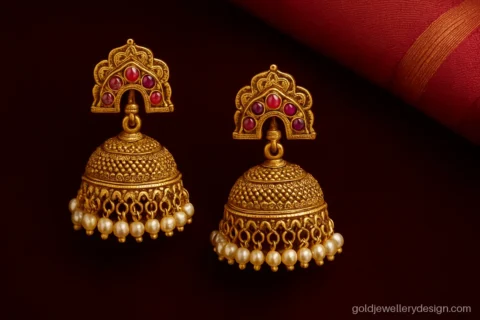
A jimiki is the South Indian name for a bell shaped jhumka. Kerala jimiki design gold pieces often have pearl or bead fringes and a small stud on top.
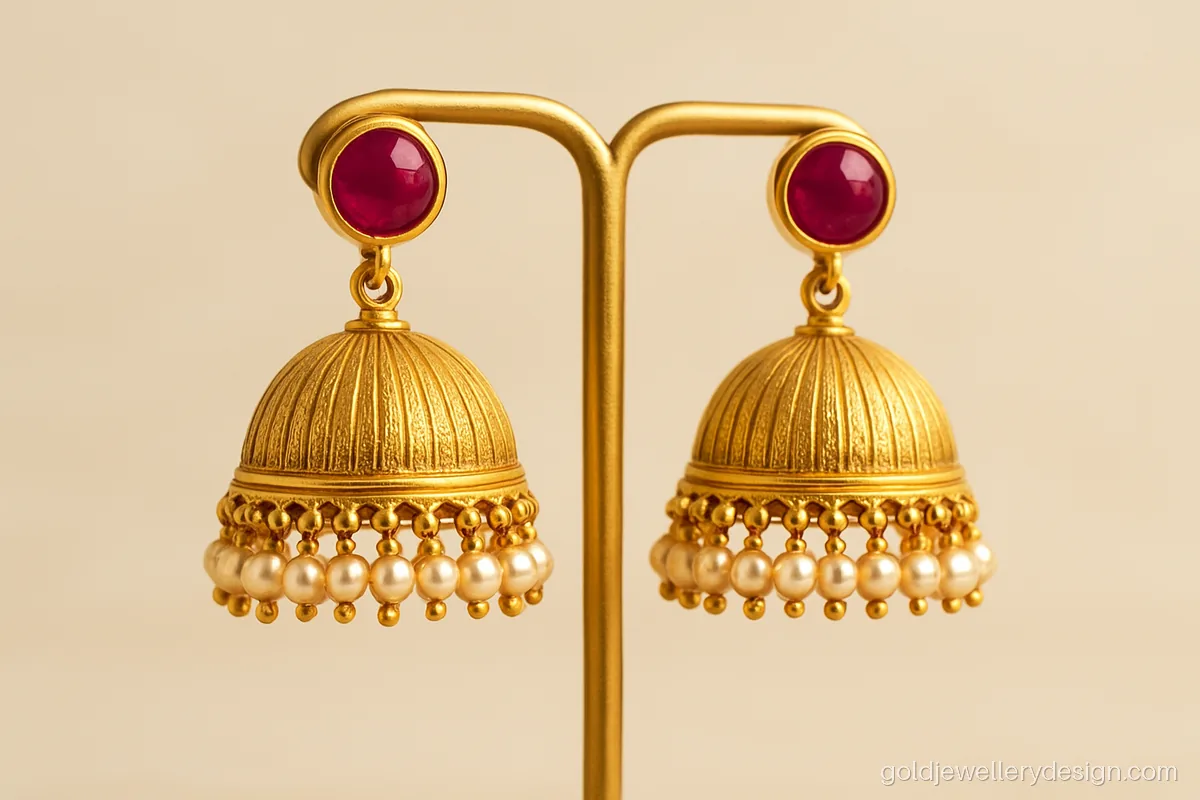
- Weight
- About 8 to 10 g pair
- Purity
- 22k, pearls, ruby
- Wear it for
- Weddings and Onam
A deep dome with creamy pearls along the rim moves softly with every step. It is a favourite for weddings and Onam.
Karigar noteAsk for screw backs, since a heavy jimiki can slip on a push back.
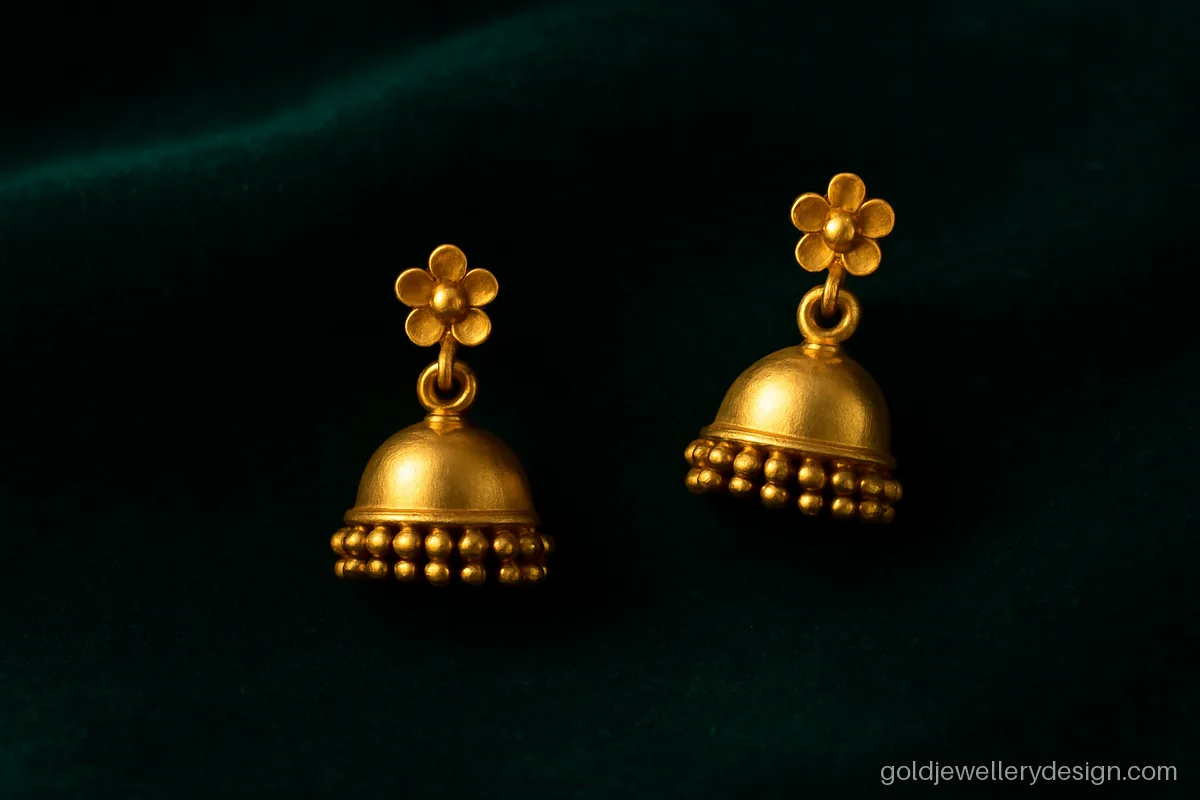
- Weight
- About 4 g pair
- Purity
- 22k, high polish
- Wear it for
- Daily and college
A small polished bell keeps the look simple for daily wear and school or college. Tiny beads at the edge add a little sound.
Karigar noteAt this weight the bell is often hollow; ask for thicker walls so it does not dent.
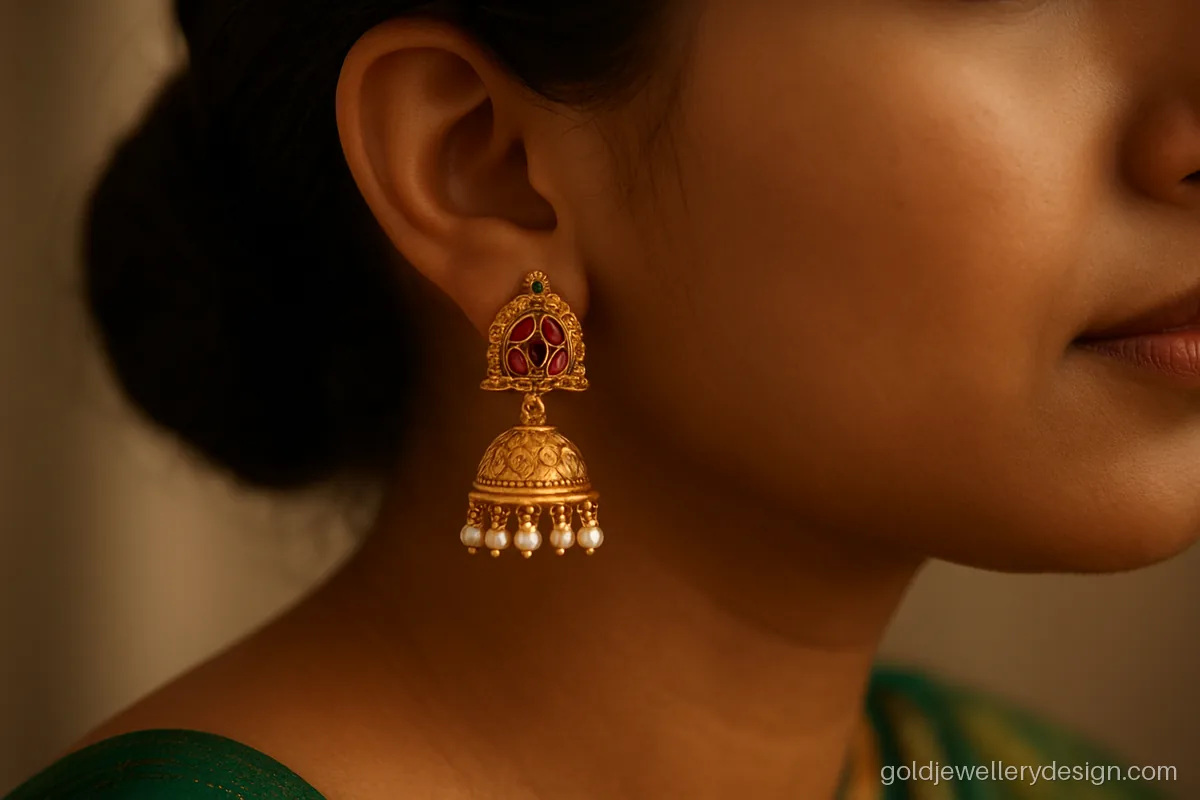
- Weight
- About 10 to 12 g pair
- Purity
- 22k, kemp-look stones
- Wear it for
- Weddings
Kemp-look stones on a temple arch stud lead into a carved bell. It pairs well with a kasu malai or temple necklace.
Karigar noteAsk for an ear support chain if the pair is heavy, and stones billed apart.
Gold Kammal Design and Thodu Studs
Kammal and thodu are the stud earrings many families wear every day. A gold kammal design is usually a flower or cluster shape with a screw back.
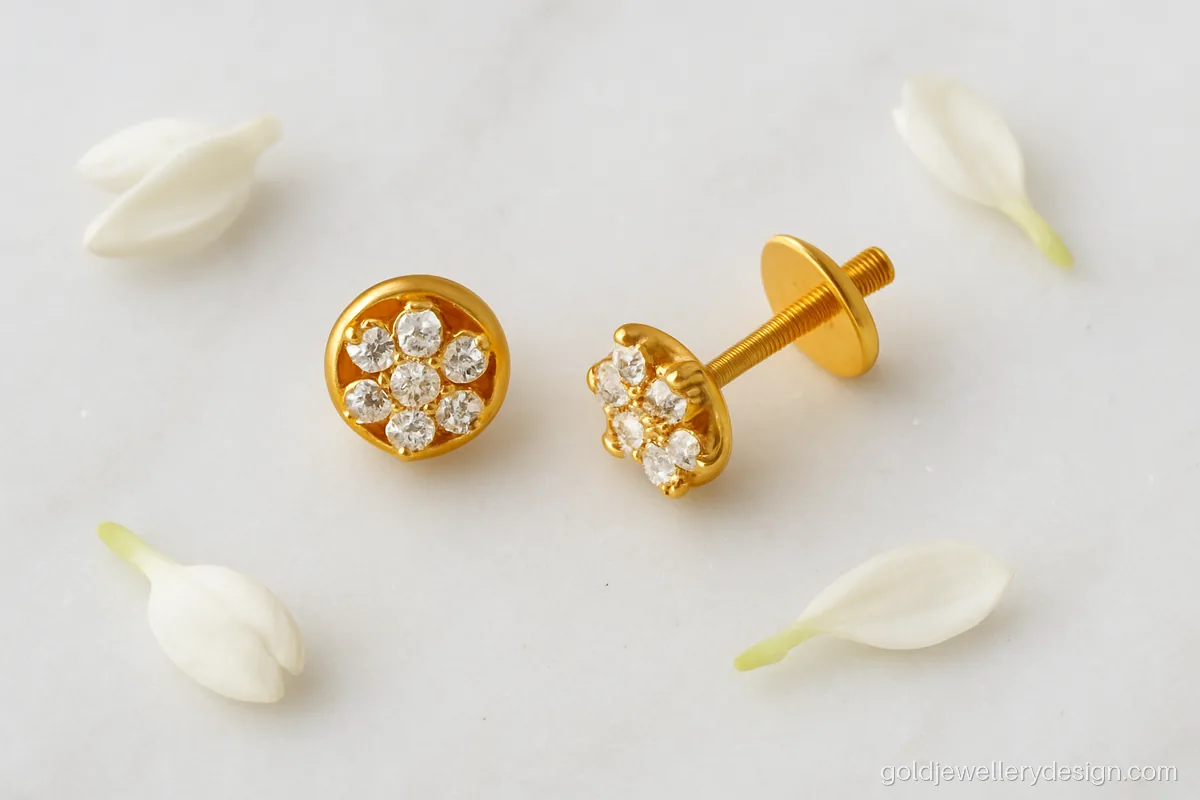
- Weight
- About 2 g pair
- Purity
- 22k, CZ
- Wear it for
- Daily wear
A small flower of seven stones gives a bright look for very little gold. It suits daily wear and young girls.
Karigar noteAsk for a screw back with a long thread so the stud does not loosen.
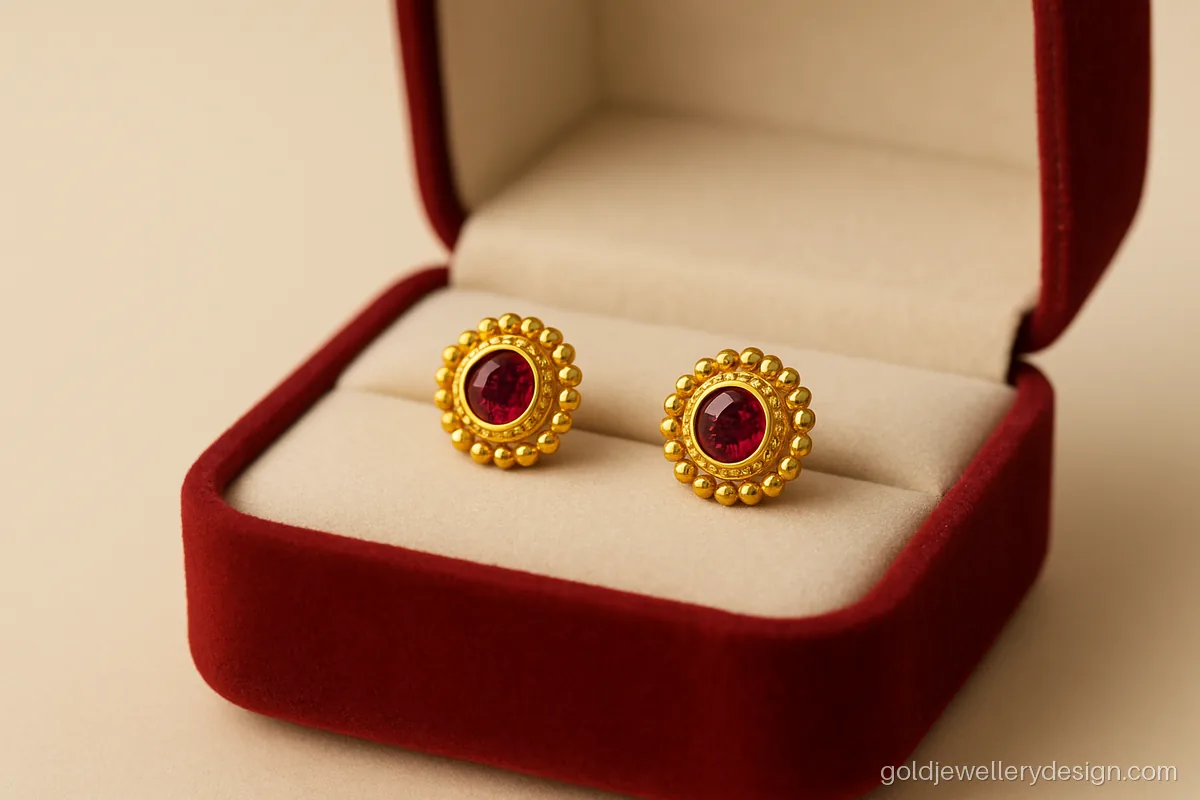
- Weight
- About 3 to 4 g pair
- Purity
- 22k, ruby
- Wear it for
- Daily and festive
A ruby in the middle with gold beads around it is a classic thodu look. It goes with both silk sarees and simple salwar.
Karigar noteAsk if the ruby is natural or synthetic, and for its weight to be listed apart.
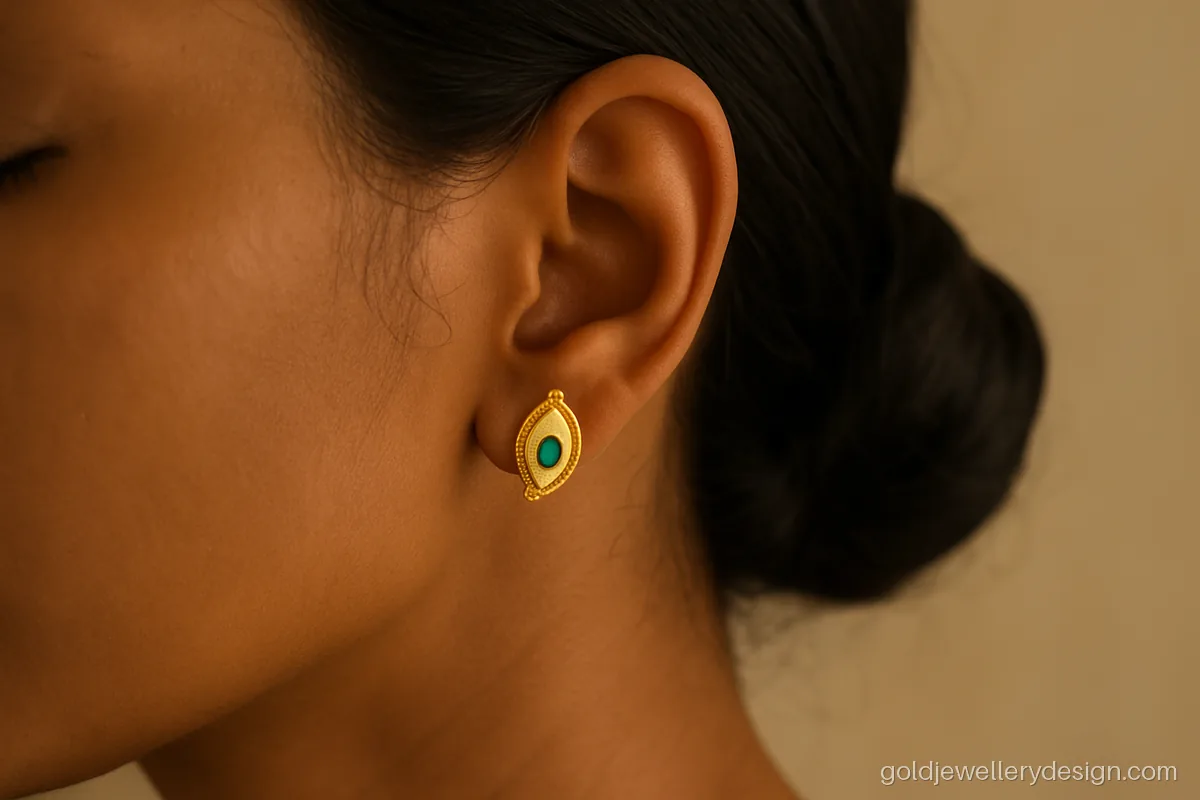
- Weight
- About 3 g pair
- Purity
- 22k, emerald-look
- Wear it for
- Daily and festive
A tiny mango stud with a green stone adds a South Indian touch to daily wear. It can be paired with a matching mango necklace.
Karigar noteAsk for a smooth back plate so it sits flat against the lobe.
Kasu Malai Gold Design
A kasu malai gold design is a long necklace of small gold coins. The coins here carry floral and lotus patterns, and many families buy one for a daughter's wedding.
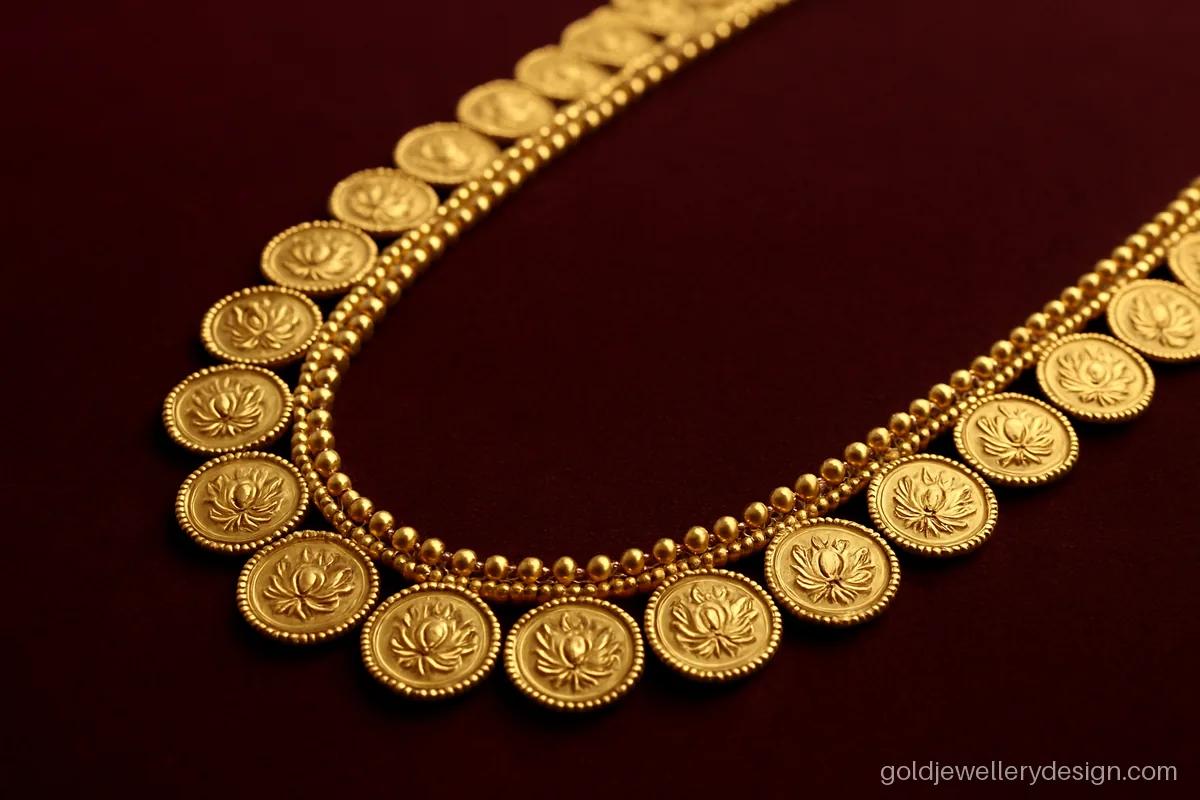
- Weight
- About 40 to 60 g
- Purity
- 22k, matte coins
- Wear it for
- Weddings
Close set coins with a lotus pattern make a shimmering long line. It falls nicely over a silk saree.
Karigar noteAsk for solid coins and closed jump rings, and check the hallmark on the clasp.
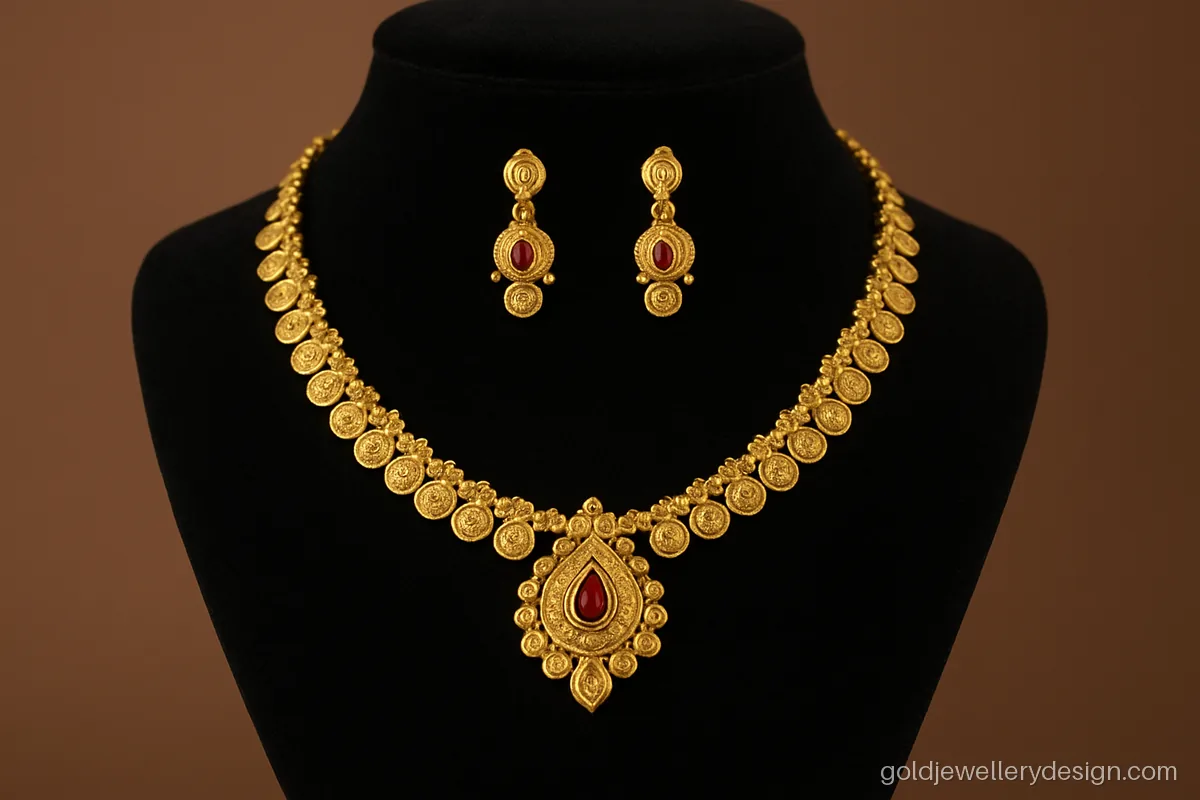
- Weight
- About 25 to 35 g
- Purity
- 22k, rubies
- Wear it for
- Pujas and functions
A shorter coin necklace with a ruby pendant is easier to wear for pujas and functions. It pairs well with jimiki earrings.
Karigar noteAsk for ruby weight on the bill and smooth coin edges so they do not scratch.
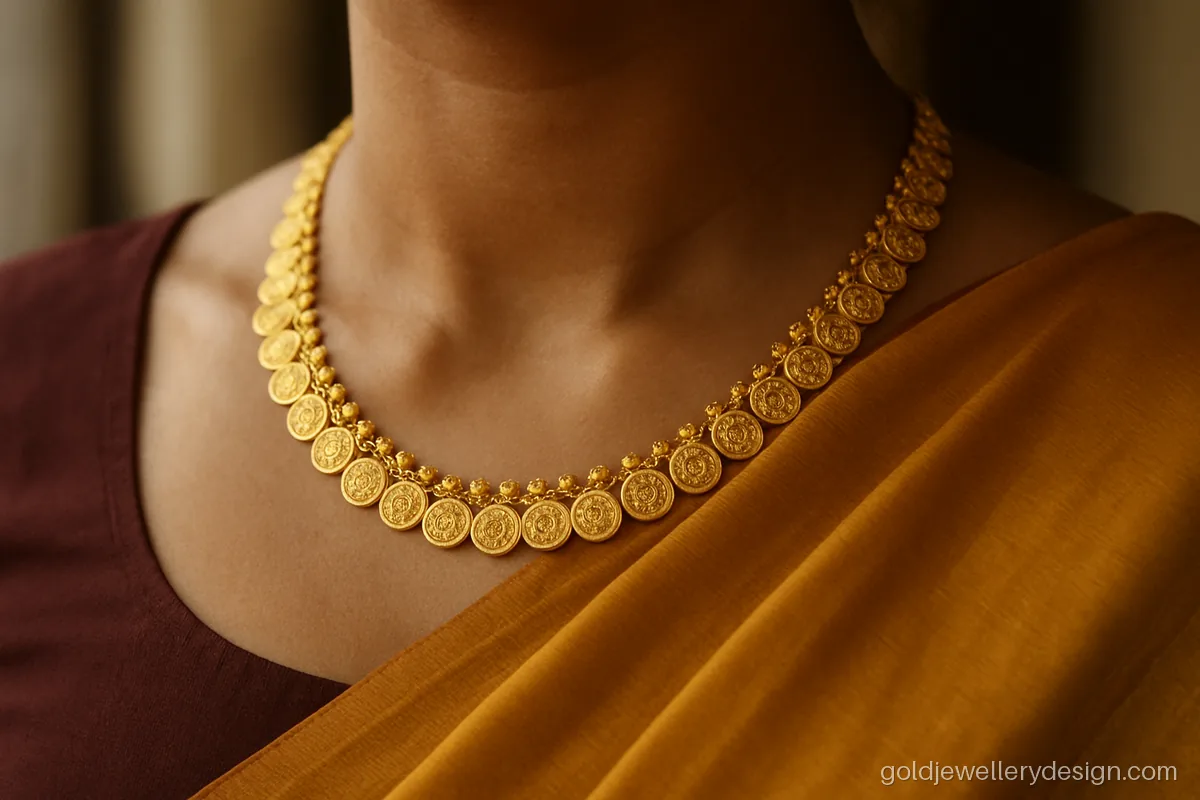
- Weight
- About 30 to 40 g
- Purity
- 22k, polished coins
- Wear it for
- Festivals and weddings
Small coins resting on the collarbone give a classic temple look. Many women wear it with a matching short necklace above.
Karigar noteAsk the karigar to keep coins close so the chain does not show gaps.
Thali Chain Design Gold and Kanthi
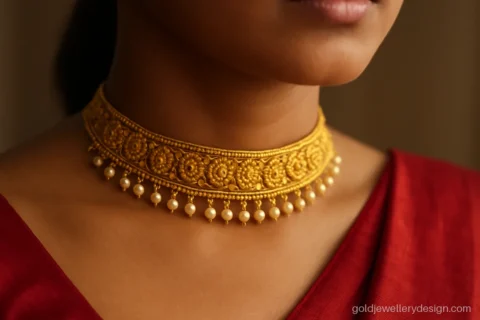
A gold thali chain design carries the thali after marriage, and styles differ from family to family. A gold kanthi design is a short, close fitting necklace worn with sarees.
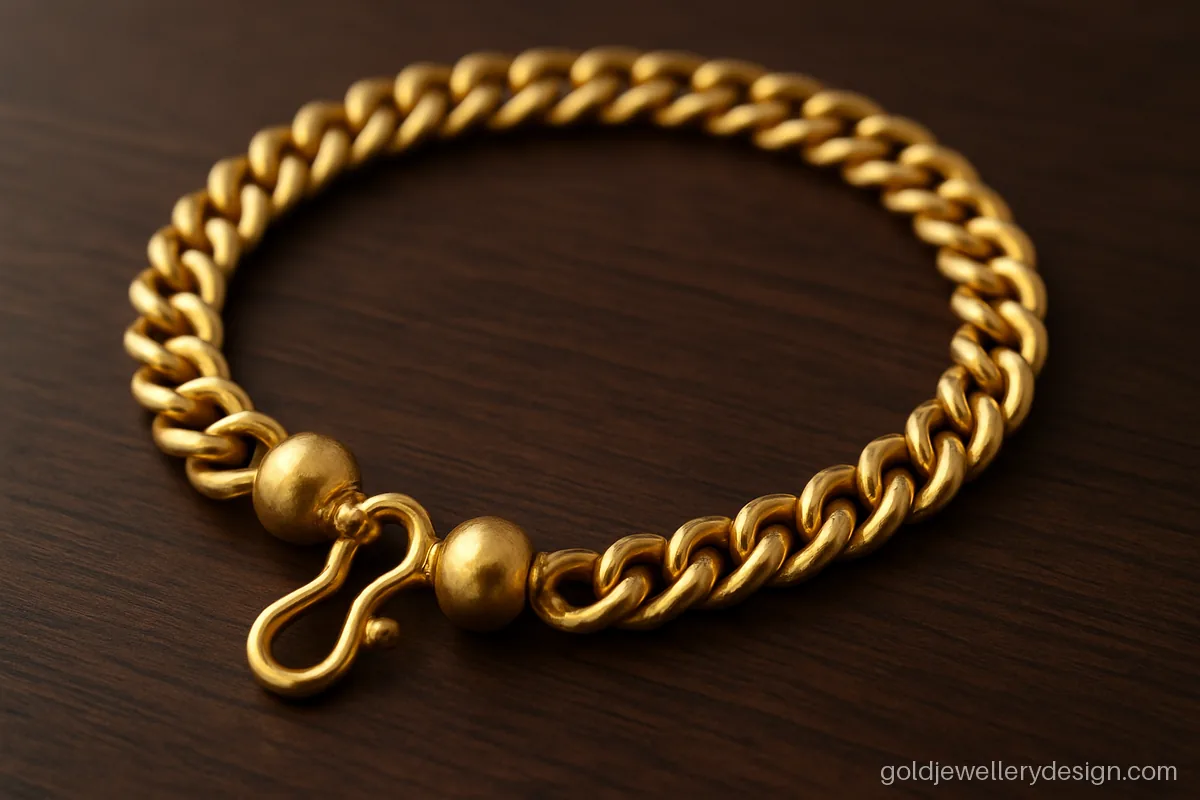
- Weight
- About 20 to 30 g
- Purity
- 22k, high polish
- Wear it for
- Daily wear
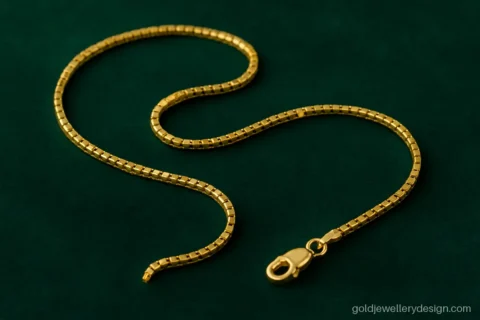
Thick, sturdy links are made to be worn every day for years. The side beads keep the thali centred.
Karigar noteAsk for a solid chain and a strong hook, as the thali chain is worn round the clock.
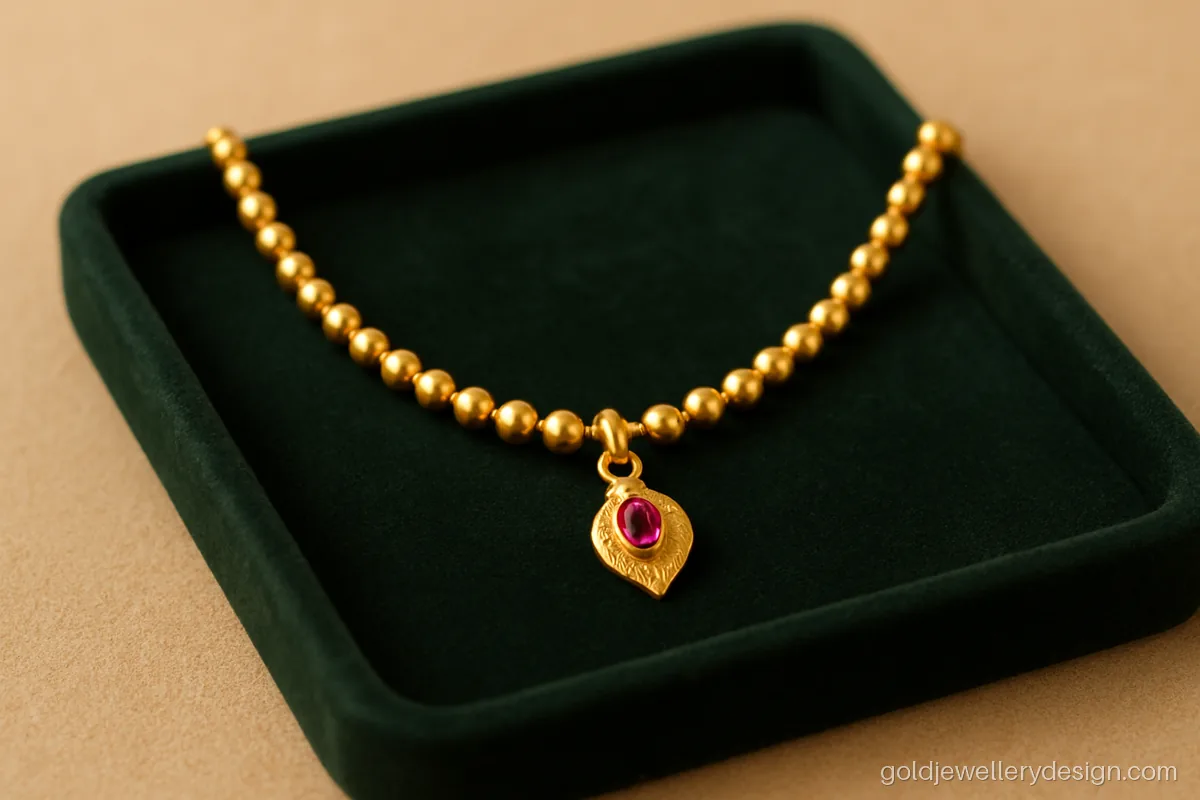
- Weight
- About 15 to 20 g
- Purity
- 22k, ruby
- Wear it for
- Festive and daily
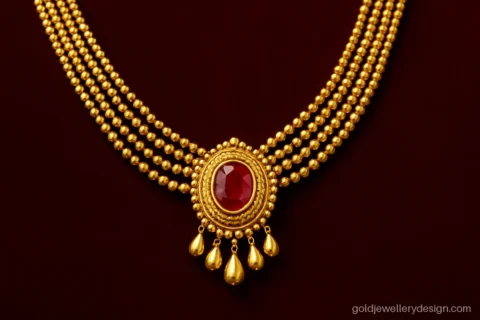
A short line of gold beads with a ruby drop sits close to the neck. It looks neat with a silk saree.
Karigar noteGold beads are often hollow; ask for hollow vs solid and the bead wall thickness.
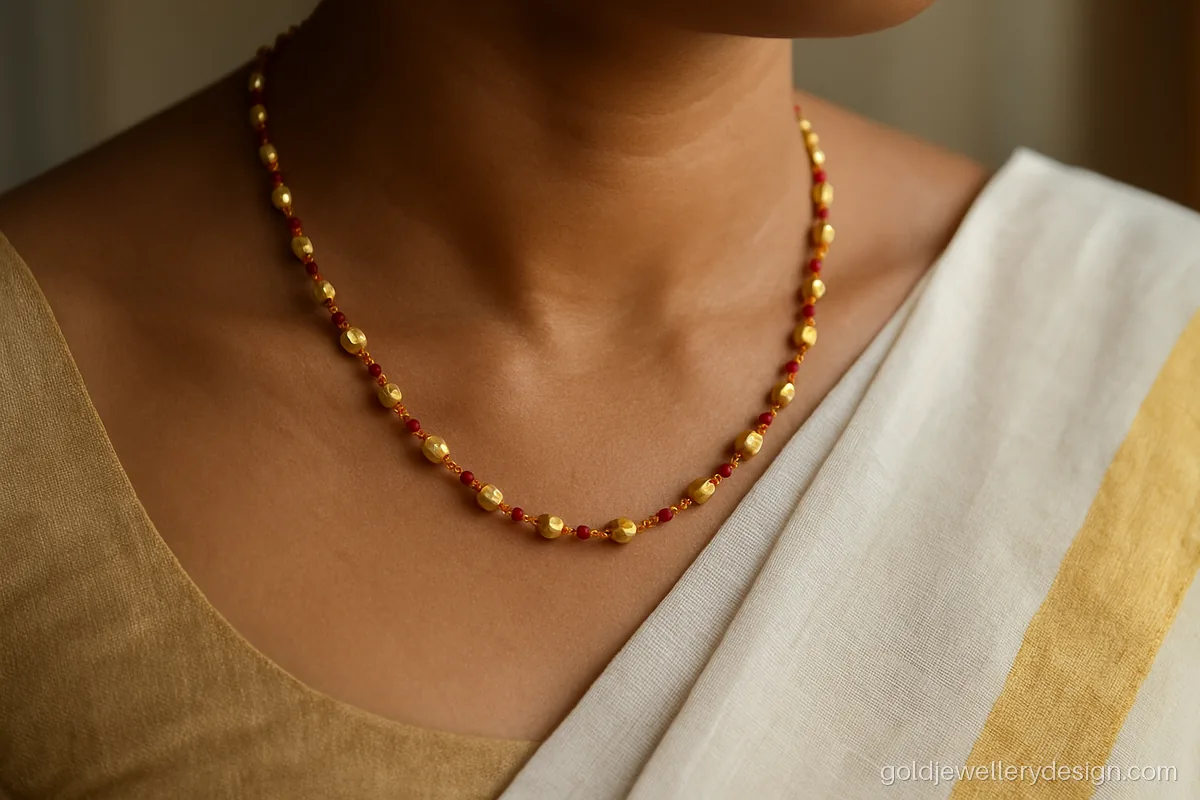
- Weight
- About 10 to 15 g gold
- Purity
- 22k, coral beads
- Wear it for
- Daily wear
Red coral beads between gold ones are a mix many South Indian families wear. It is light enough for daily use.
Karigar noteAsk for coral weight to be listed apart and strung on strong thread.
Vanki Ring, Gold Mani Design and Karimani
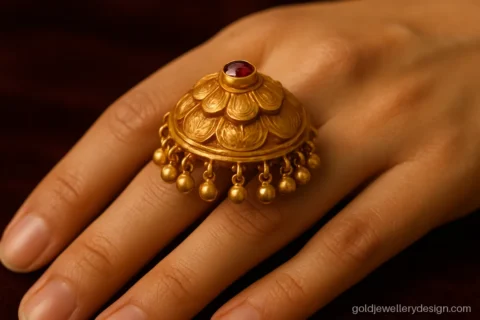
A vanki is a V shaped armlet or ring worn by many South Indian brides. A gold mani design uses beads, and karimani adds black beads to the chain.
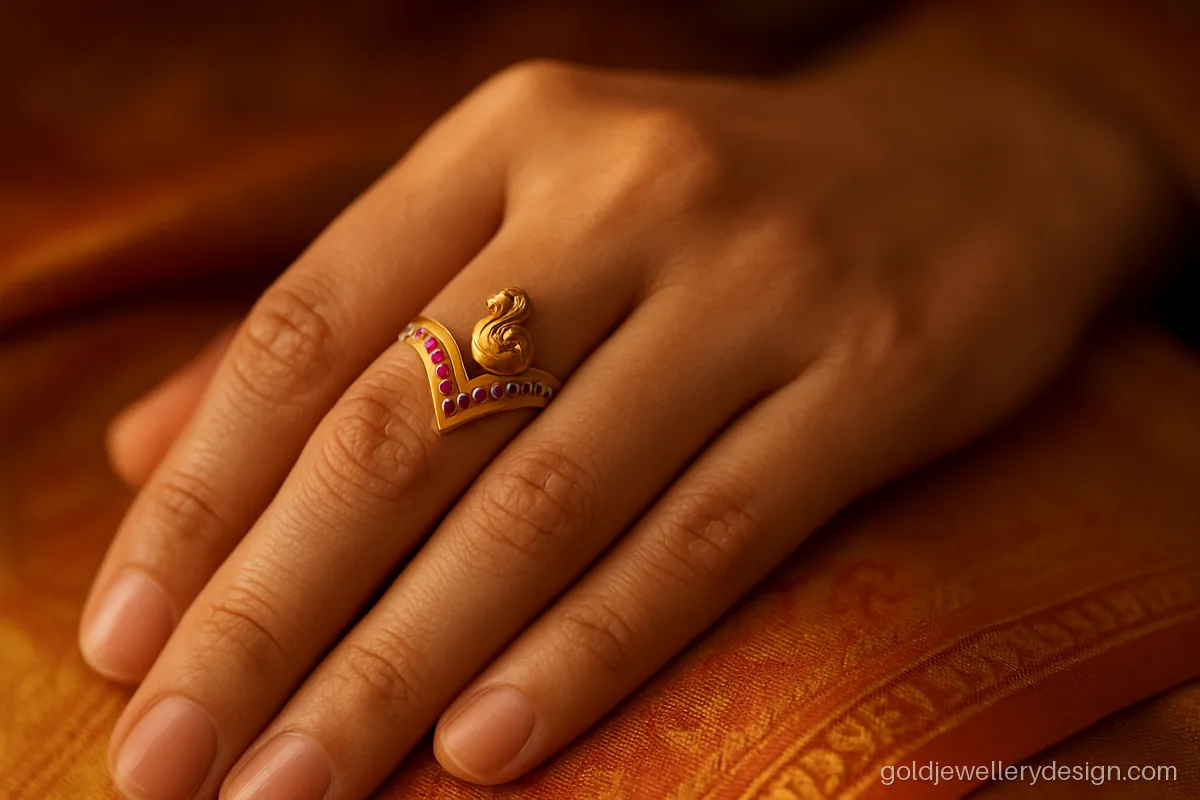
- Weight
- About 5 to 8 g
- Purity
- 22k, rubies
- Wear it for
- Wedding day
The V shape follows the finger and frames the hand. It is a bridal favourite in many South Indian homes.
Karigar noteAsk for an Indian ring size measured with a ring sizer, as vanki rings sit lower on the finger.
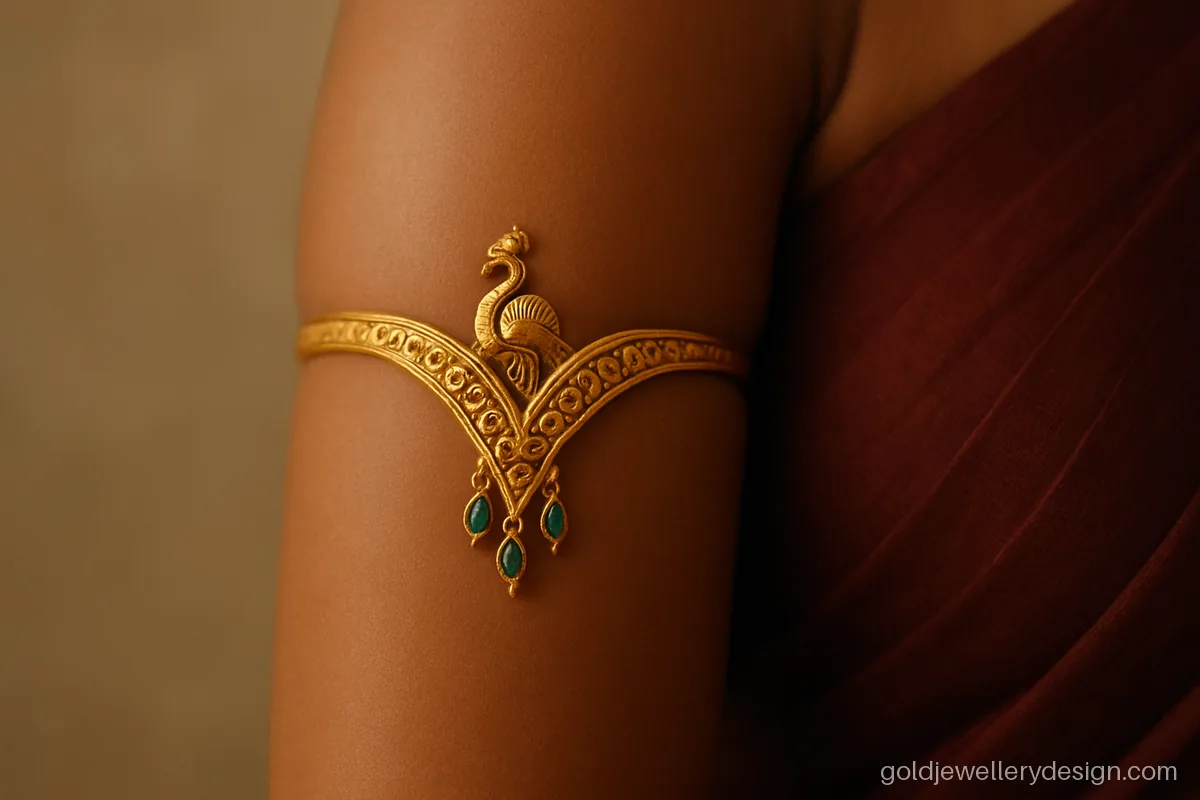
- Weight
- About 25 to 35 g
- Purity
- 22k, emeralds
- Wear it for
- Wedding day
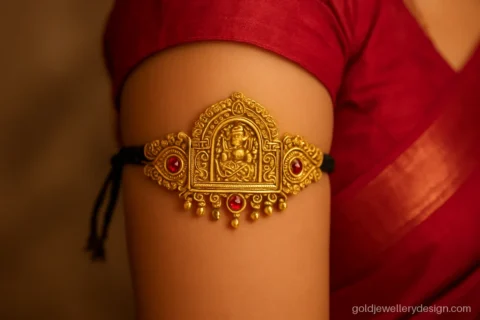
A bridal vanki sits on the upper arm with a V shaped centre. It looks best with sleeveless or elbow length blouses.
Karigar noteAsk for an adjustable back so the vanki fits your arm size.
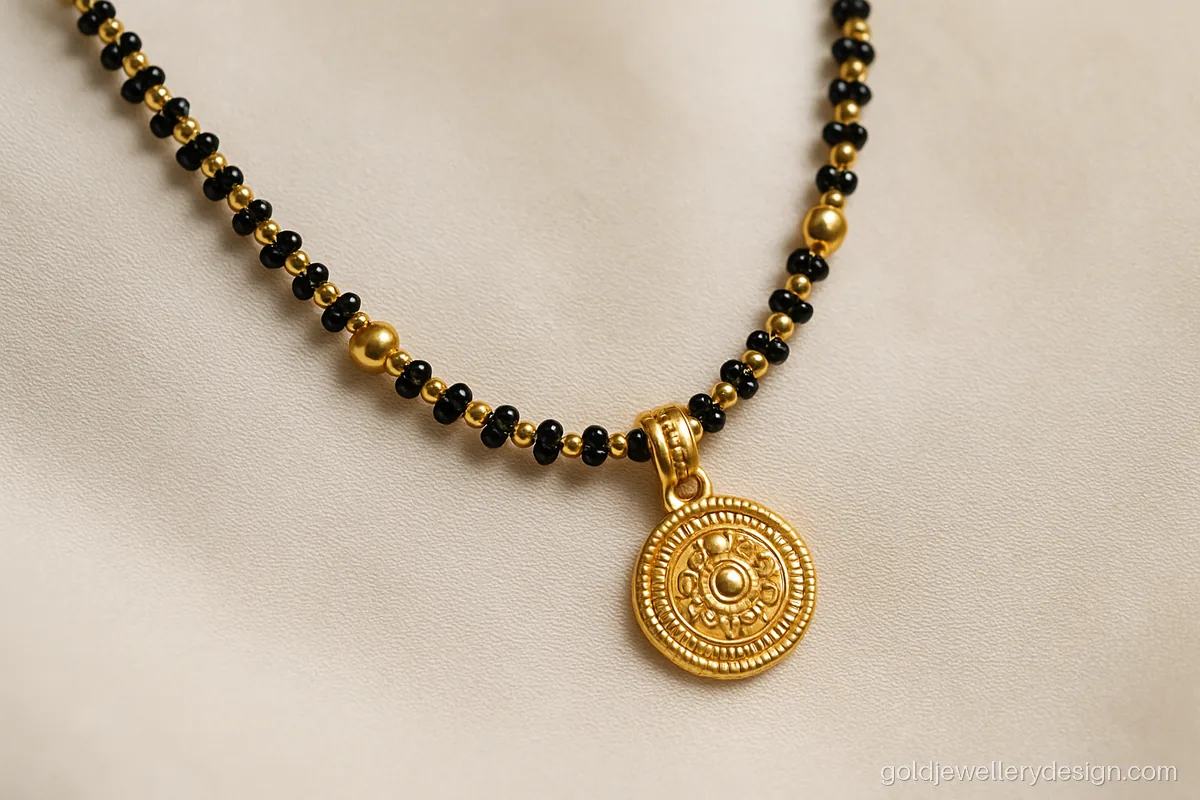
- Weight
- About 8 to 15 g gold
- Purity
- 22k, black beads
- Wear it for
- Daily wear
Black beads between gold mani give a striking contrast. Many families in Karnataka and Andhra wear this as a daily chain.
Karigar noteAsk for the black beads to be strung on gold wire so they last longer.
How to Choose South Indian Gold Pieces
Most South Indian pieces are made in 22k for a deep yellow colour. Temple and kemp work look best in an antique or matte finish. For daily wear, pick a solid thali chain or kammal studs with screw backs.
| Piece | Typical weight | Worn for |
|---|---|---|
| Kammal or thodu | 2 to 4 g pair | Daily |
| Jimiki | 4 to 12 g pair | Daily to weddings |
| Thali chain | 15 to 30 g | Daily after marriage |
| Kasu malai | 25 to 60 g | Weddings, festivals |
| Vanki armlet | 25 to 35 g | Wedding day |
A gold kolusu design (anklet) is less common, as many families wear silver on the feet. Upper arm pieces from other regions are in bajuband and hathphool.
What to Check When Buying
- BIS hallmark with purity like 22K916 and a 6-digit HUID.
- Kemp, coral, pearl and ruby weights listed apart from gold weight.
- Hollow vs solid on beads and jimiki bells.
Price is weight times the board rate for the karat, add making charges, then add 3% GST. Clean temple pieces with mild soap and a soft brush, never a polishing machine.
Questions buyers ask
What is a jimiki?
Jimiki is the South Indian name for a bell shaped jhumka earring. Kerala styles often have pearl fringes and a stud on top. Heavier pairs need screw backs or an ear support chain.
How much does a jimiki design gold 4 gram pair look like?
A 4 gram pair is usually a small polished bell with a tiny stud. It suits daily wear and college. Ask for thicker walls since light bells are often hollow.
What is the difference between kammal and thodu?
Both are stud earrings. Kammal is the Tamil name and thodu is common in Kerala and Tamil Nadu. Flower clusters and ruby centres are popular in both.
What is a kasu malai?
A kasu malai is a necklace of small gold coins, often long. The coins usually carry floral or lotus patterns. Many families buy it for weddings.
How heavy is a gold thali chain design?
Most thali chains weigh about 15 to 30 grams. Since it is worn every day, choose a solid chain with a strong hook. Tali design gold styles vary a lot between communities, so follow what your family prefers.
What is a vanki ring gold design?
It is a V shaped ring that many South Indian brides wear on their wedding day. It often has rubies or a small peacock. Get your Indian ring size measured with a sizer first.