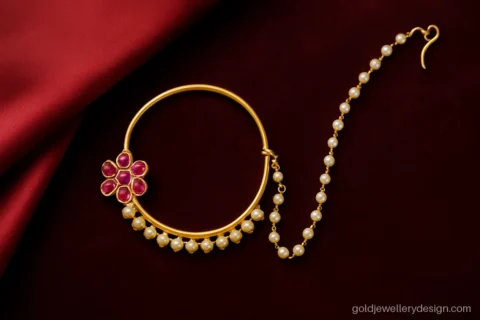
Gold Jewellery Price Guide: How Your Bill Is Worked Out
Gold jewellery price in India is worked out with one simple formula: the rate per gram for that karat times the weight, then making and 3% GST. Stones and pearls are charged separately.
This guide explains each part in plain words, with worked examples, a karat chart and the checks to do before you pay. We never list today's rate here, because it changes every day. Use the examples to understand the maths, then use the real rate at the shop.
The 12 designs below show how weight, hollow or solid build, and stones change the bill. Browse full galleries like gold set designs and gold earrings design once you know what to look for.
Gold Necklace Design With Price: Reading the Weight
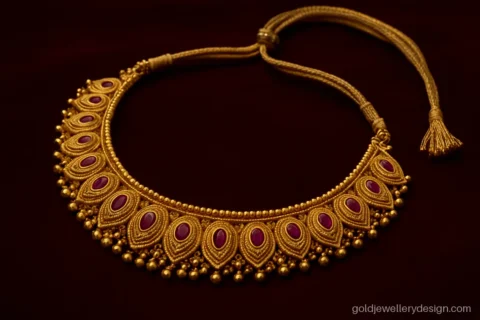
A real gold necklace design carries the most gold of any piece, so a small change in weight moves the bill a lot. Use these as a guide to weight, then apply the day's rate. More styles are on our gold necklace design page.
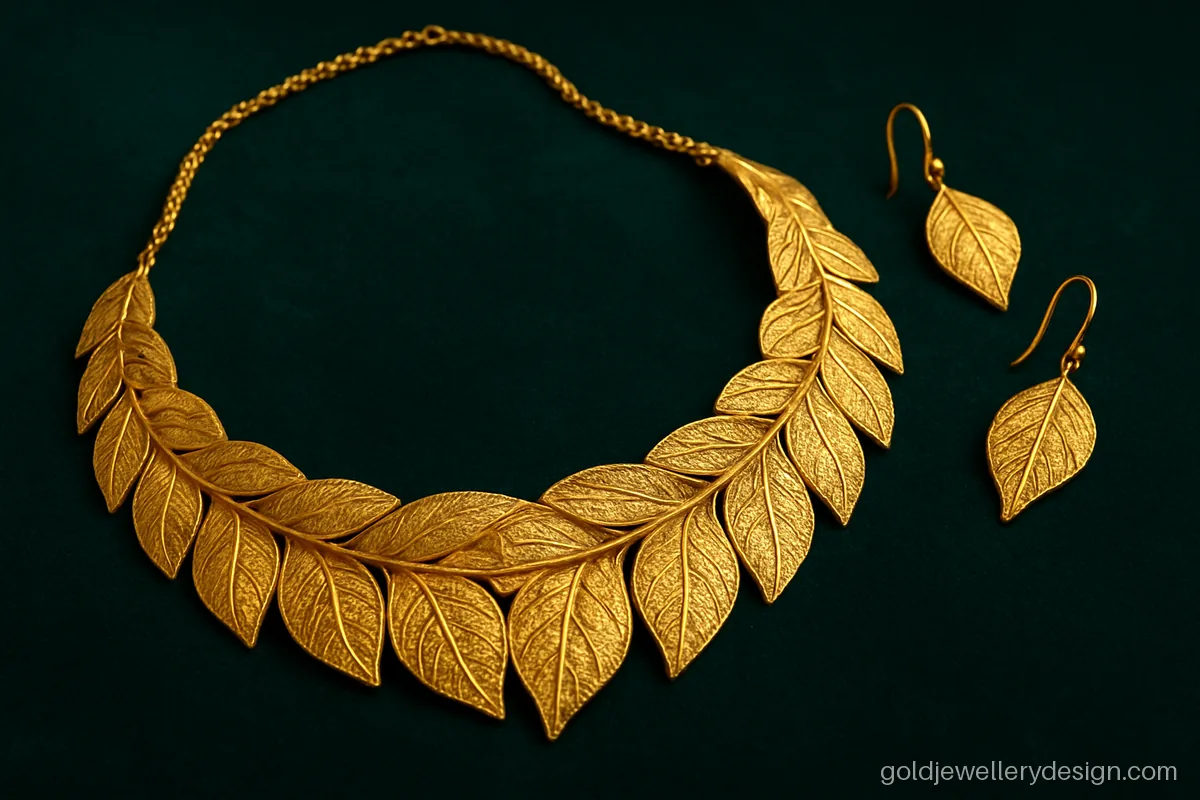
- Weight
- About 18 to 22 g
- Purity
- 22k, matte and polish
- Wear it for
- Weddings and festivals
A leaf collar of this size is a common first wedding necklace. Weight sets most of the cost.
Karigar noteAsk for net gold weight, making charge type and the HUID on the tag before you compare.
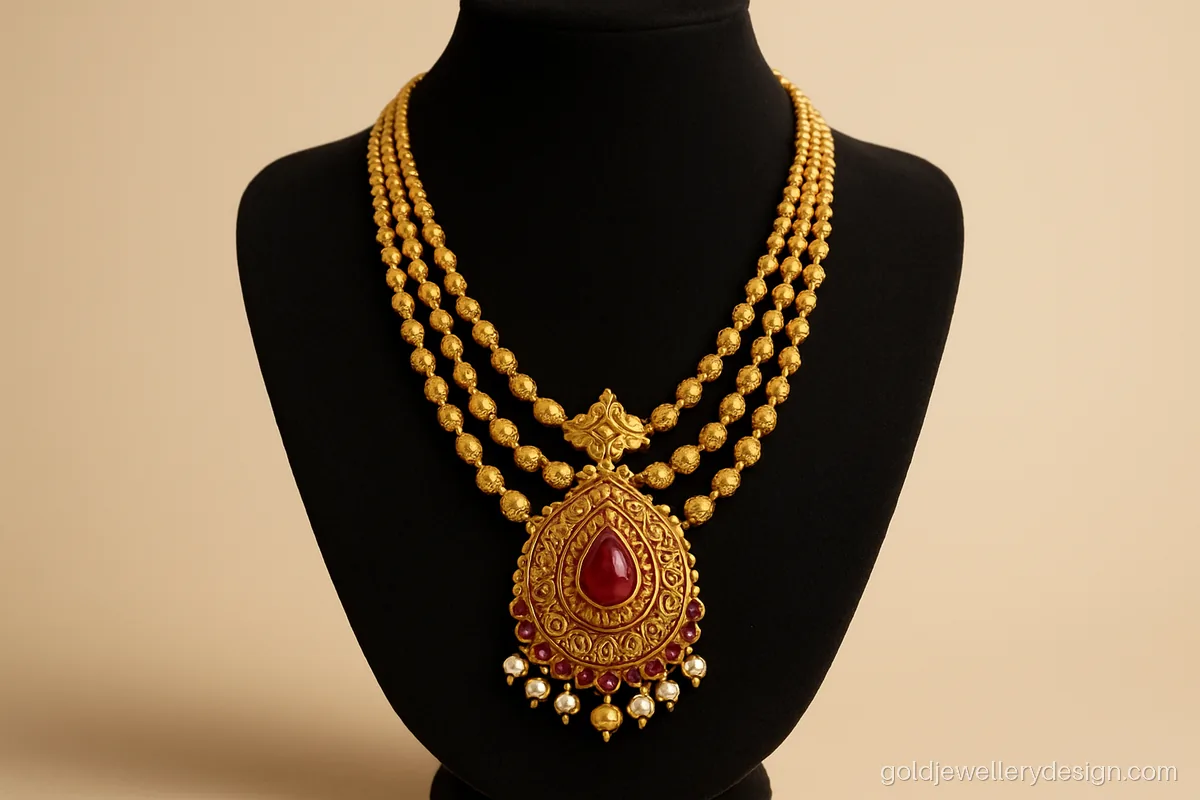
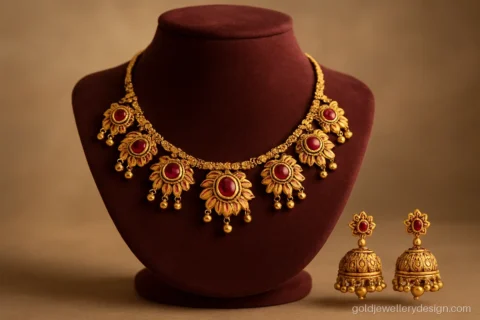
- Weight
- About 40 to 60 g
- Purity
- 22k, ruby and pearls
- Wear it for
- Bridal
A long rani haar uses a lot of gold, so even a one gram difference changes the quote.
Karigar noteAsk if the pendant is hollow or solid. Hollow parts cut weight but dent more easily.
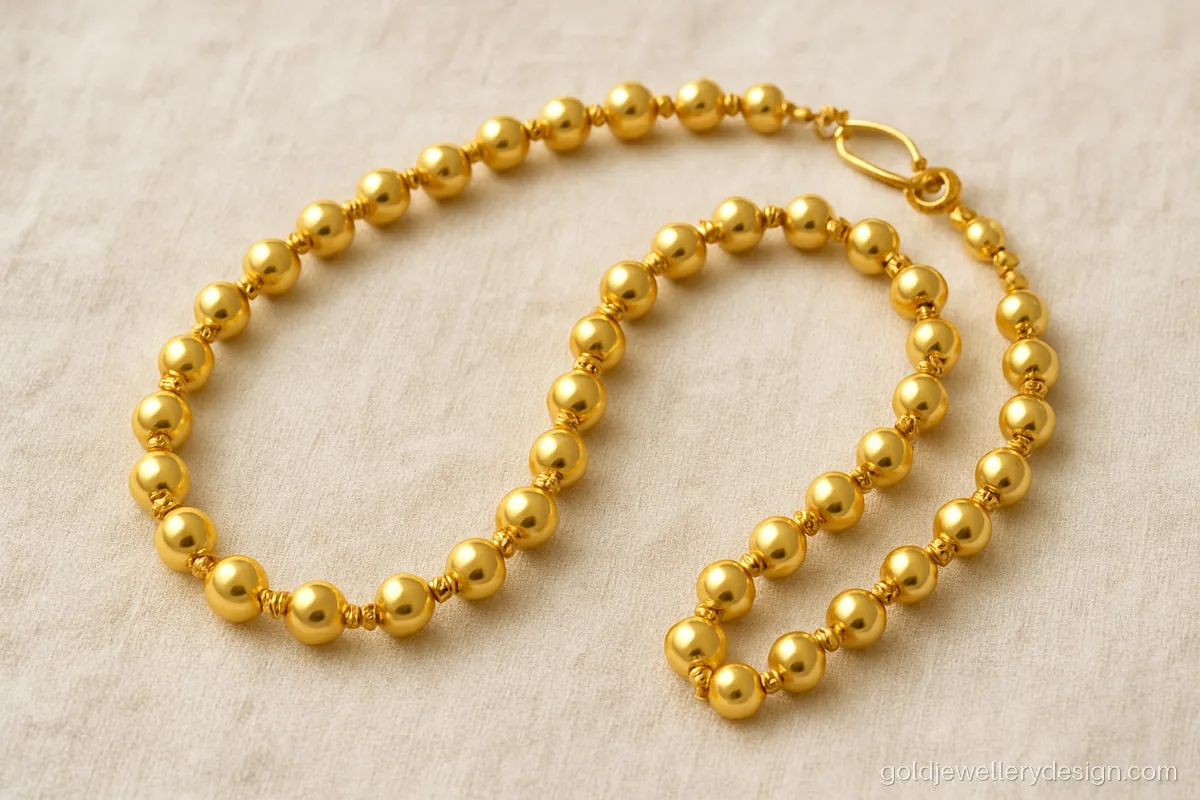
- Weight
- About 10 to 14 g
- Purity
- 22k, polished beads
- Wear it for
- Daily and functions
Gold moti beads are often hollow. They look full but weigh much less than solid beads.
Karigar noteAsk how many beads are hollow and press one gently to check it does not give.
Gold Earrings and Nath Design With Price
Earrings and nose rings are small, so making charges are a bigger part of their price. Compare the making charge, not only the gold rate. See gold jhumka designs and gold nath designs for more.
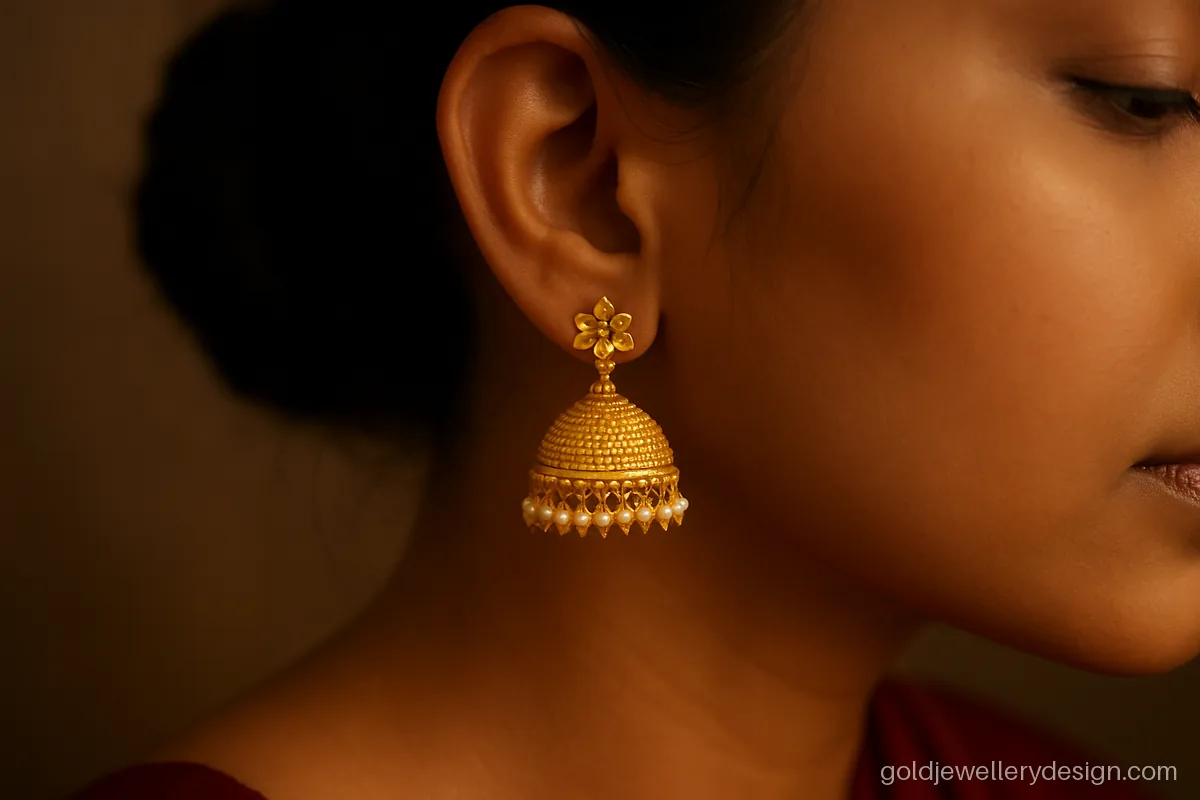
- Weight
- About 8 to 10 g pair
- Purity
- 22k, pearls
- Wear it for
- Weddings and festivals
A medium jhumka with a pearl fringe has fine work, so making charges are often higher.
Karigar notePearls are not gold. Ask for pearl weight to be removed from the gold weight.
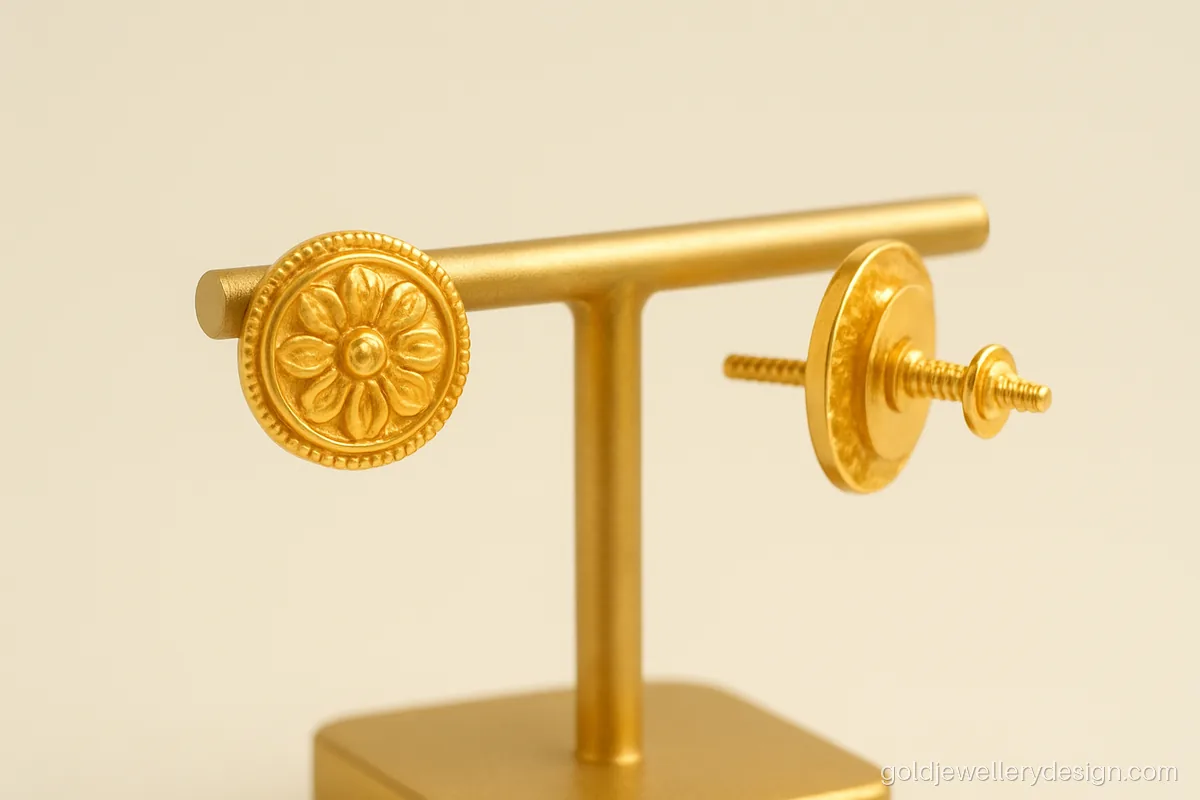
- Weight
- About 2 to 3 g pair
- Purity
- 22k, high polish
- Wear it for
- Daily wear
Solid studs keep their value well, since most of what you pay for is gold.
Karigar noteAsk to see the hallmark on the back or post, with the purity and HUID.
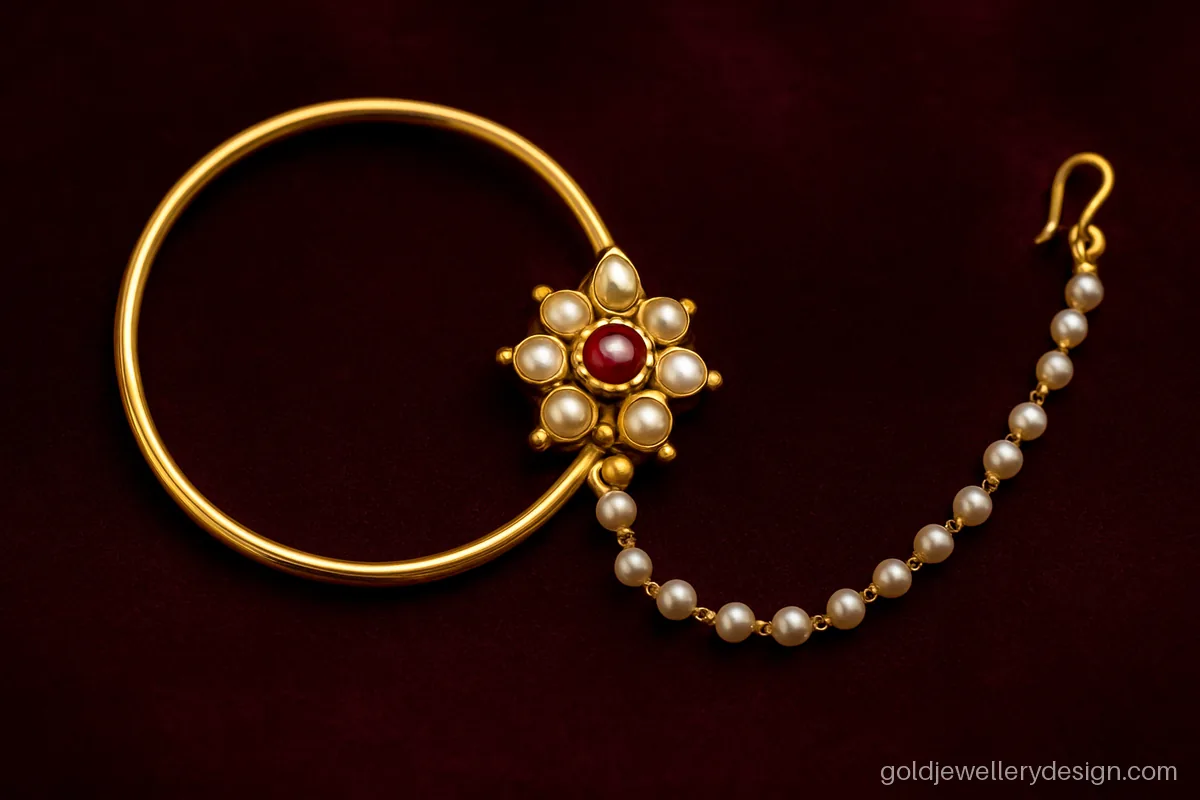
- Weight
- About 4 to 6 g
- Purity
- 22k, pearls and rubies
- Wear it for
- Bridal
A bridal nath with a pearl chain has gold, stones and pearls, each priced in its own way.
Karigar noteAsk for gold, stone and pearl weights on separate lines of the bill.
Bangles, Pola and Bala: 22k Gold Bangles Design
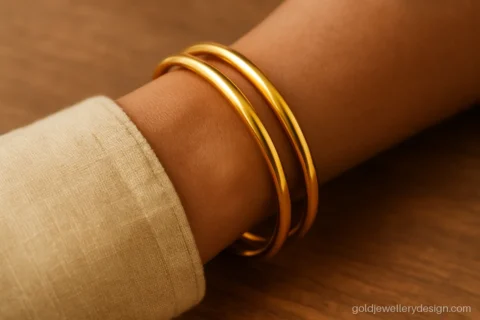
Bangles come in pairs and sets, so weight adds up fast. Hollow and solid bangles of the same size can differ a lot in gold.
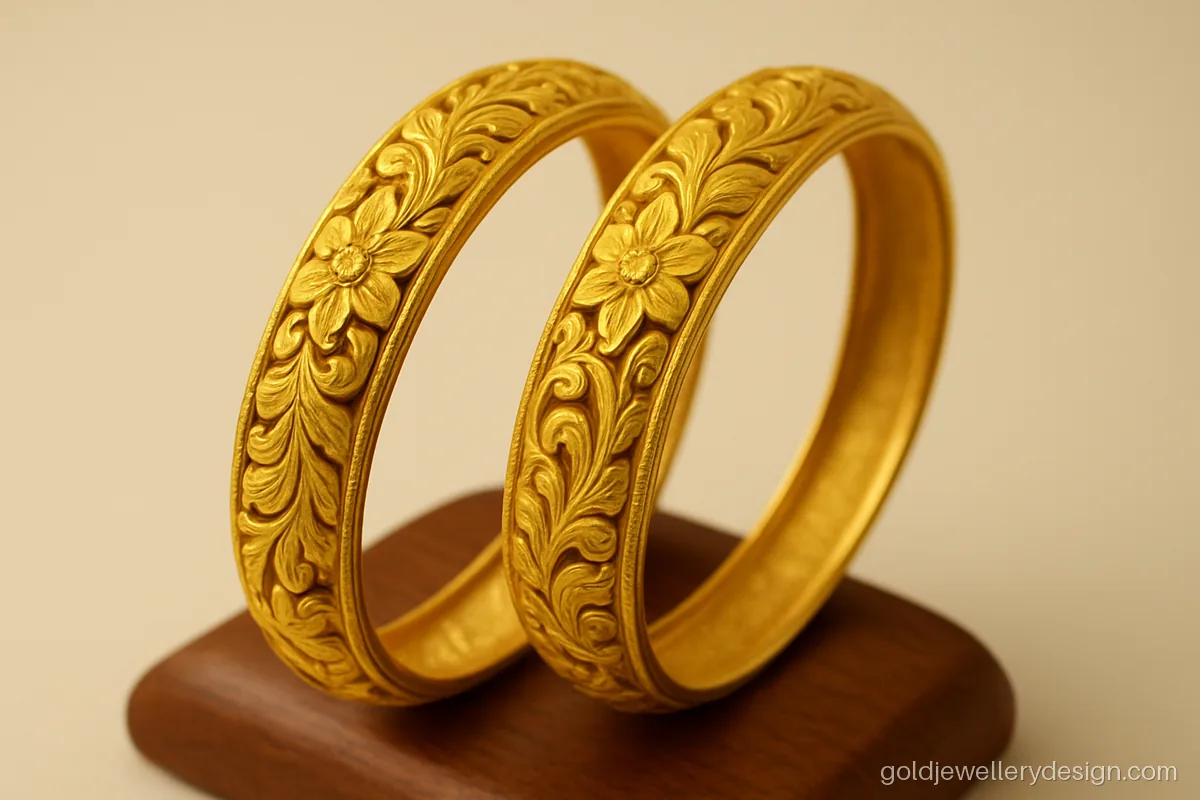
- Weight
- About 20 to 30 g pair
- Purity
- 22k, carved
- Wear it for
- Daily and weddings
A carved solid pair keeps its shape for years and gives good value at exchange time.
Karigar noteAsk if the bangles are solid or pipe. Pipe bangles are lighter but dent.
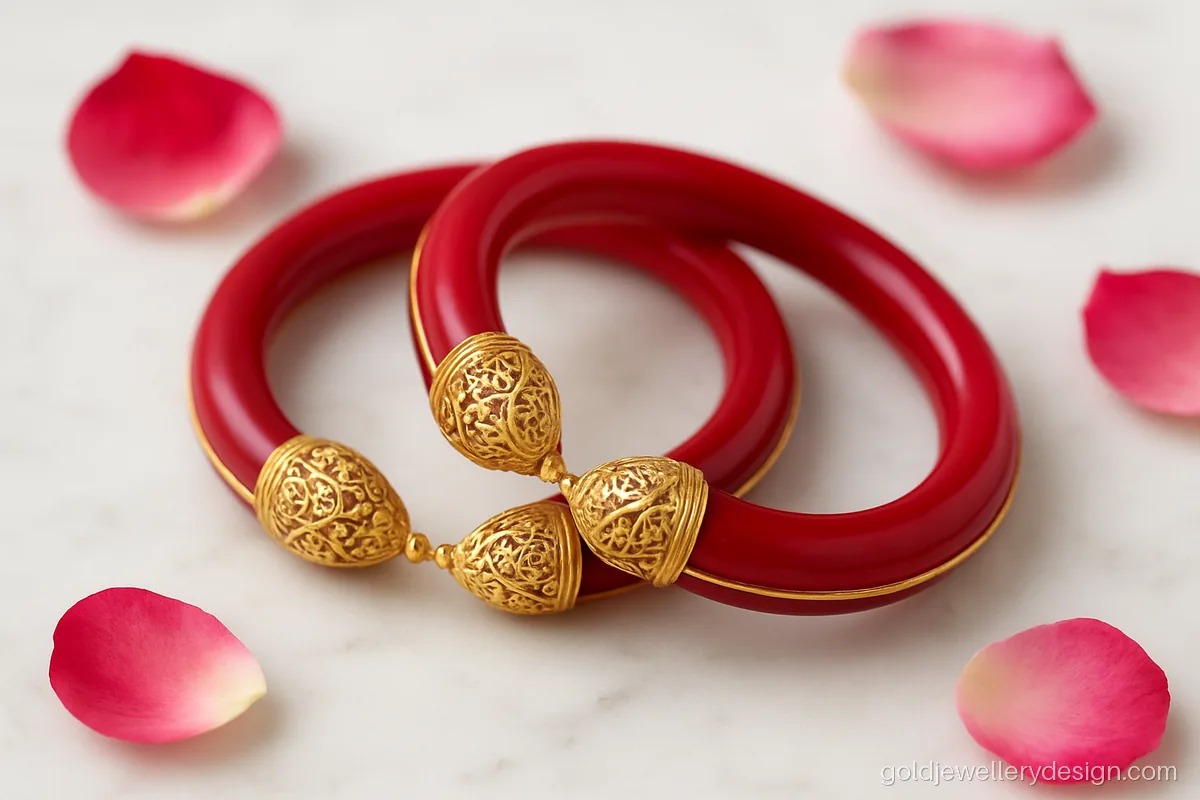
- Weight
- About 6 to 10 g gold
- Purity
- 22k on red pola
- Wear it for
- Bengali weddings
In a pola, only the gold work is billed at the gold rate. The red base is not gold.
Karigar noteAsk for the net gold weight with the pola base removed from the count.
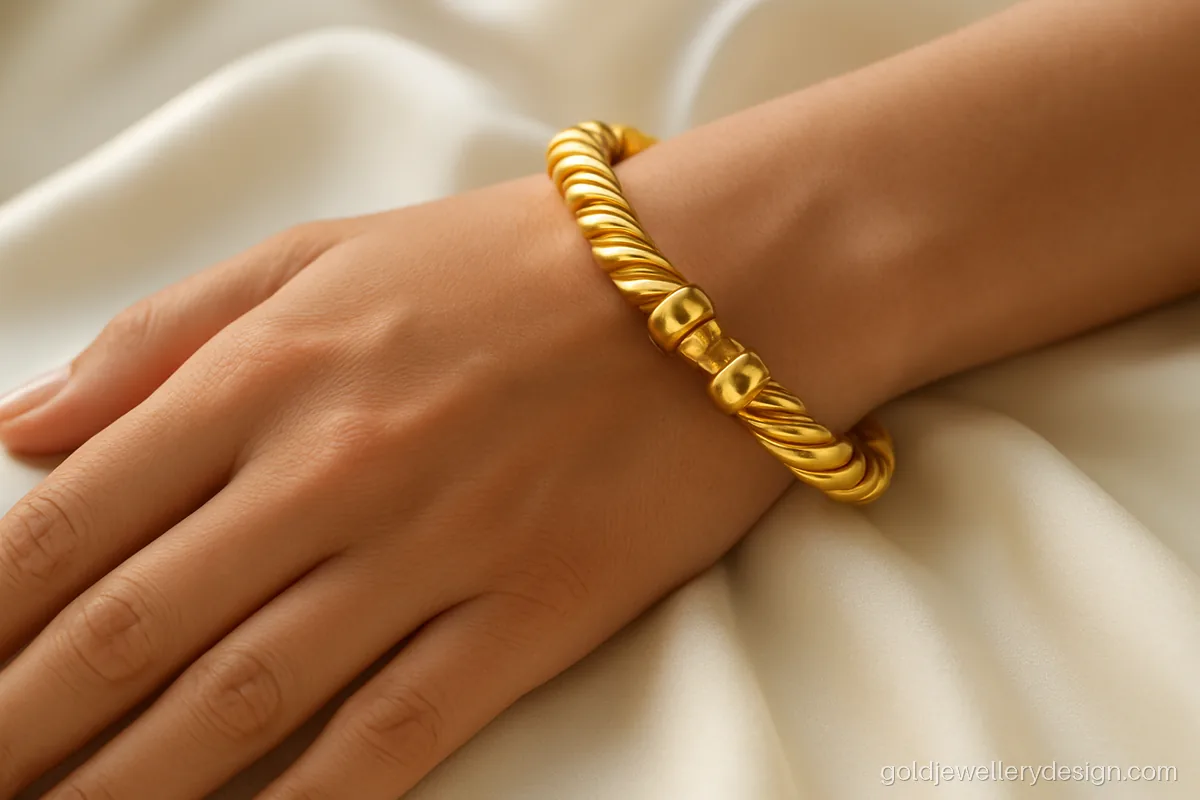
- Weight
- About 25 to 40 g
- Purity
- 22k, twisted
- Wear it for
- Weddings and gifts
A twisted bala is a big piece of solid gold, so the gold rate matters more than making.
Karigar noteCheck the screw opening and ask for weight to be shown on the scale in front of you.
Rings, Lockets and Chains: Gold Jewellery Price by Piece
Small items often have the highest making charge per gram. Chains are the opposite: machine made, so making is lower.
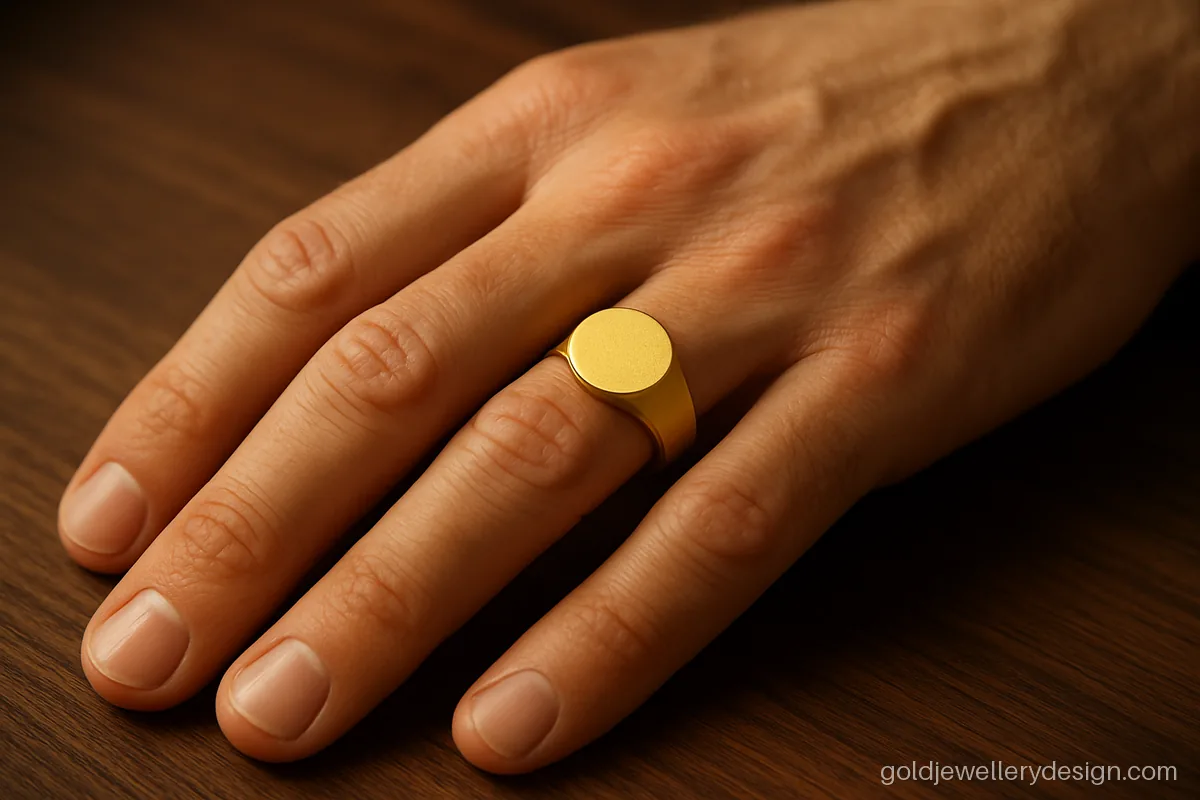
- Weight
- About 6 to 8 g
- Purity
- 24k, matte
- Wear it for
- Investment and puja
24k is 99.9 percent pure and very soft. A plain coin ring is one of the few designs that suits it.
Karigar note24k scratches and bends easily. Ask for a thick shank or choose 22k for daily wear.
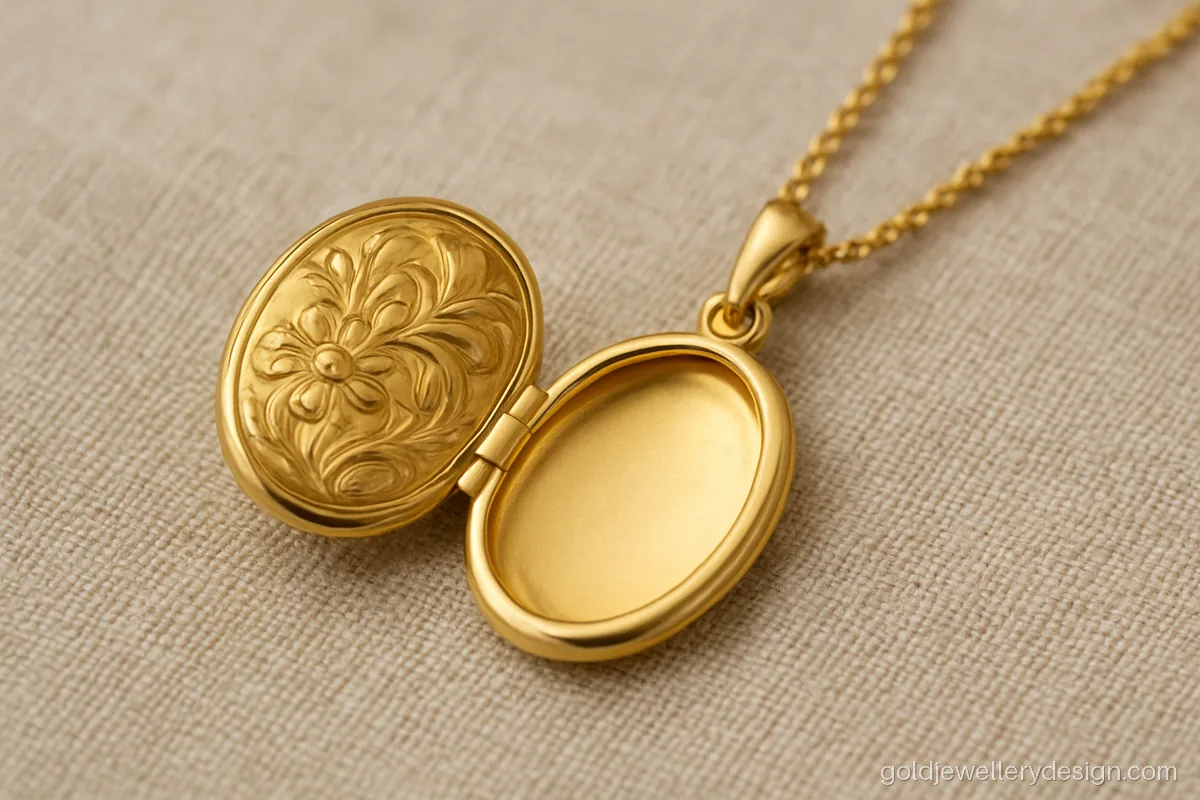
- Weight
- About 3 to 5 g
- Purity
- 22k, engraved
- Wear it for
- Gifts and daily
An oval locket that opens for a photo has a hinge and clasp, which adds making work.
Karigar noteAsk if the locket is hollow. Check the hinge opens smoothly and shuts firmly.
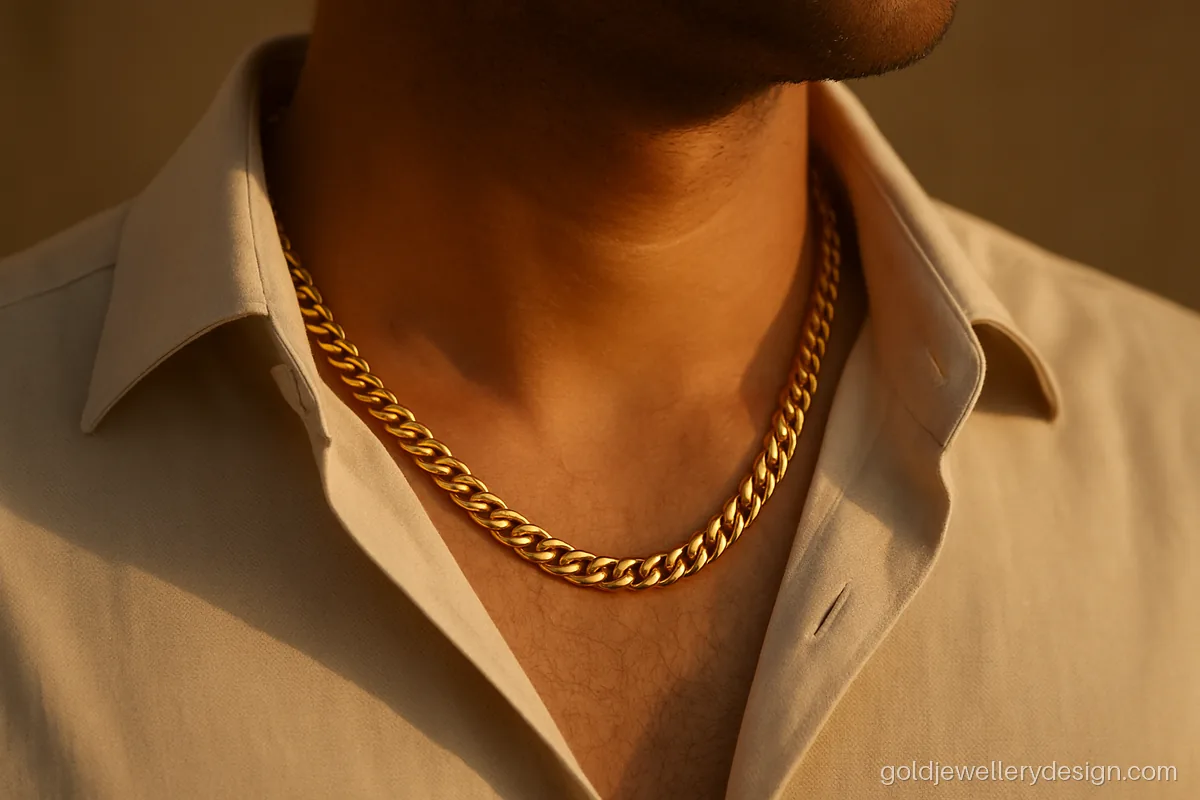
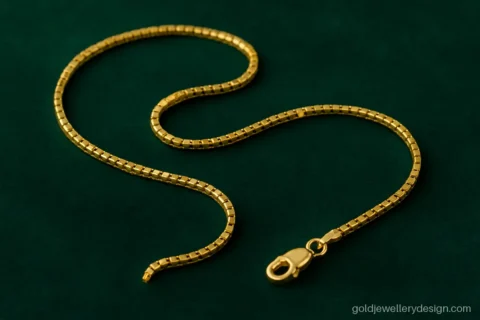
- Weight
- About 15 to 25 g
- Purity
- 22k, high polish
- Wear it for
- Daily wear
Machine made curb chains have low making charges, so more of your money goes into gold.
Karigar noteAsk for solid links and a lobster clasp. Check the hallmark on the clasp tag.
How Gold Jewellery Price Is Calculated
Every jeweller in India uses the same basic formula. Once you know it, you can check any bill yourself.
Price = (gold weight x that day's rate for the karat) + making charges + 3% GST on the total
- Gold weight is the net weight of gold only. Stones, pearls, lac, wax and pola are not gold and should not be billed at the gold rate.
- Rate for the karat changes every day. The 22k rate is lower than 24k, and 18k is lower again, because there is less pure gold in each gram.
- Making charges pay for the karigar's work. Some shops charge a fixed amount per gram. Others charge a percentage of the gold value.
- Stones are charged separately by their own weight and quality.
- GST on gold jewellery is 3 percent.
Some families still talk in tola. One tola is about 11.66 g, though some shops use 10 g when they quote a tola rate. Always ask which one they mean.
Worked Examples (Example Rates Only)
These examples use a made-up round rate so the maths is easy. They are not today's gold rate. Check the real rate on the day you buy.
Example 1: a 10 g, 22k necklace with 12 percent making. If the 22k rate is ₹10,000 per gram (example only):
| Step | Working | Amount |
|---|---|---|
| Gold value | 10 g x ₹10,000 | ₹1,00,000 |
| Making at 12% | 12% of ₹1,00,000 | ₹12,000 |
| Subtotal | ₹1,12,000 | |
| GST at 3% | 3% of ₹1,12,000 | ₹3,360 |
| Total | ₹1,15,360 |
Example 2: a 4 g, 18k ruby ring with per gram making. If the 18k rate is ₹8,200 per gram, making is ₹900 per gram and the ruby is ₹5,000 (all example figures):
| Step | Working | Amount |
|---|---|---|
| Gold value | 4 g x ₹8,200 | ₹32,800 |
| Making | 4 g x ₹900 | ₹3,600 |
| Ruby | charged separately | ₹5,000 |
| Subtotal | ₹41,400 | |
| GST at 3% | 3% of ₹41,400 | ₹1,242 |
| Total | ₹42,642 |
Notice that if the ruby weighed 1 g and was wrongly billed as gold, you would pay the gold rate on it. That is why the stone weight must be listed apart.
24k vs 22k vs 18k vs 14k Gold
| Karat | Gold content | Stamp | Best for |
|---|---|---|---|
| 24k | 99.9 percent | 999 | Coins and bars. Too soft for most jewellery. |
| 22k | 91.6 percent | 22K916 | Most Indian jewellery: chains, bangles, necklaces, plain rings. |
| 18k | 75 percent | 18K750 | Diamond and stone settings, modern and light designs. |
| 14k | 58.5 percent | 14K585 | Very light daily pieces and some rose gold styles. |
Lower karat costs less per gram but also gives less back at exchange. 18k makes sense when stones need strong prongs. For plain gold you plan to keep or exchange, 22k is the usual choice.
BIS Hallmark and the 6-Digit HUID
Gold jewellery sold by jewellers in India must carry a BIS hallmark. Look for three things, usually stamped very small on the clasp, inside a ring or on the back of an earring:
- The BIS mark (a triangle).
- The purity grade, such as 22K916 or 18K750.
- A 6-digit HUID, a unique code for that piece.
You can check the HUID using the official BIS app before you pay. The details should match the karat and type of item on your bill. If a piece has no HUID, ask why and think twice before buying.
Real vs Plated, Wastage and Comparing Quotes
Real vs plated. Many shops sell "1 gram gold" jewellery. In most cases this is gold-plated or micro-plated metal with very little real gold. It is fine for fashion use, but it has almost no resale value. Real gold jewellery will carry a hallmark and HUID.
Wastage. Some jewellers, especially in South India, charge "wastage" or value addition instead of making. It is shown as a percentage of weight, for example 10 percent wastage on 10 g means you pay for 11 g of gold. Ask them to show it as a making charge so you can compare.
How to compare quotes:
- Ask each shop for the same four numbers: net gold weight, rate per gram for the karat, making charge, and stone charges.
- Convert all making charges to one form, either per gram or a percentage.
- Check that the gold rate matches the rate board for that day.
- Compare the final total with GST, not just the making charge.
Hollow (pipe) designs look bigger for less gold. They cost less but dent more easily and are harder to repair. Our gold bangles and gold chain galleries mark which styles are often hollow.
Exchange and Buyback
Most jewellers take back old gold in two ways. Exchange means you trade it for new jewellery, usually with a smaller deduction. Buyback means you take cash or a bank transfer, often with a larger deduction.
- The old piece is valued on its pure gold content, so a hallmark helps you get a fair value.
- Making charges and GST you paid earlier are generally not returned.
- Stones are usually not paid for, or are paid at a low value.
- Keep every bill and certificate. Some jewellers give better terms on their own pieces.
Before buying, ask the shop to write their exchange and buyback terms on the bill. That one step can save a lot later. For design ideas across every category, start at our home page.
Questions buyers ask
How do I calculate gold jewellery price?
Multiply the net gold weight by the day's rate for that karat. Add making charges, then add 3 percent GST on the total. Stones are added separately at their own price.
What does gold necklace design with price mean on a tag?
It usually shows the weight, karat and making charge, and sometimes a total at that day's rate. The total changes when the rate changes, so always check the date and the rate used.
Is 22k or 18k better value?
22k holds more gold and gives more back at exchange. 18k costs less per gram and holds stones better. For plain designs most families pick 22k; for stone settings 18k is often the better choice.
Why is the making charge on earrings higher than on chains?
Earrings like a jhumka need a lot of hand work for little gold, so the karigar's time is a bigger share. Chains are mostly machine made, so making charges per gram are lower.
How do I know if gold earrings or a necklace are real?
Look for the BIS hallmark with the purity grade and a 6-digit HUID, and check the HUID on the official BIS app. Plated pieces sold as 1 gram gold will not carry a proper HUID.
Do I get the making charge back when I sell gold?
Usually not. Jewellers pay for the pure gold content at the day's rate, minus a deduction. Making charges, GST and most stone value are generally not returned.