Gold Bajuband Design with Hathphool, Kamarband and Payal
This gold bajuband design gallery covers the bridal pieces that finish a wedding look: armlets for the upper arm, hathphool for the hand, kamarband for the waist and payal for the feet. Each picture has a rough weight and a note to take to your karigar.
Many brides wear these pieces for a day or two and then keep them for family functions, so think about comfort and how easily a piece can be adjusted. A bajuband that fits on the wedding day should still fit at a cousin's wedding years later.
To complete the look, see our gold maang tikka design and gold nath design pages.
Bajuband Design Gold for the Upper Arm
A bajuband sits on the upper arm, just above the elbow or higher. Most bajuband gold design pieces tie with a thread dori, so one piece fits many arm sizes.
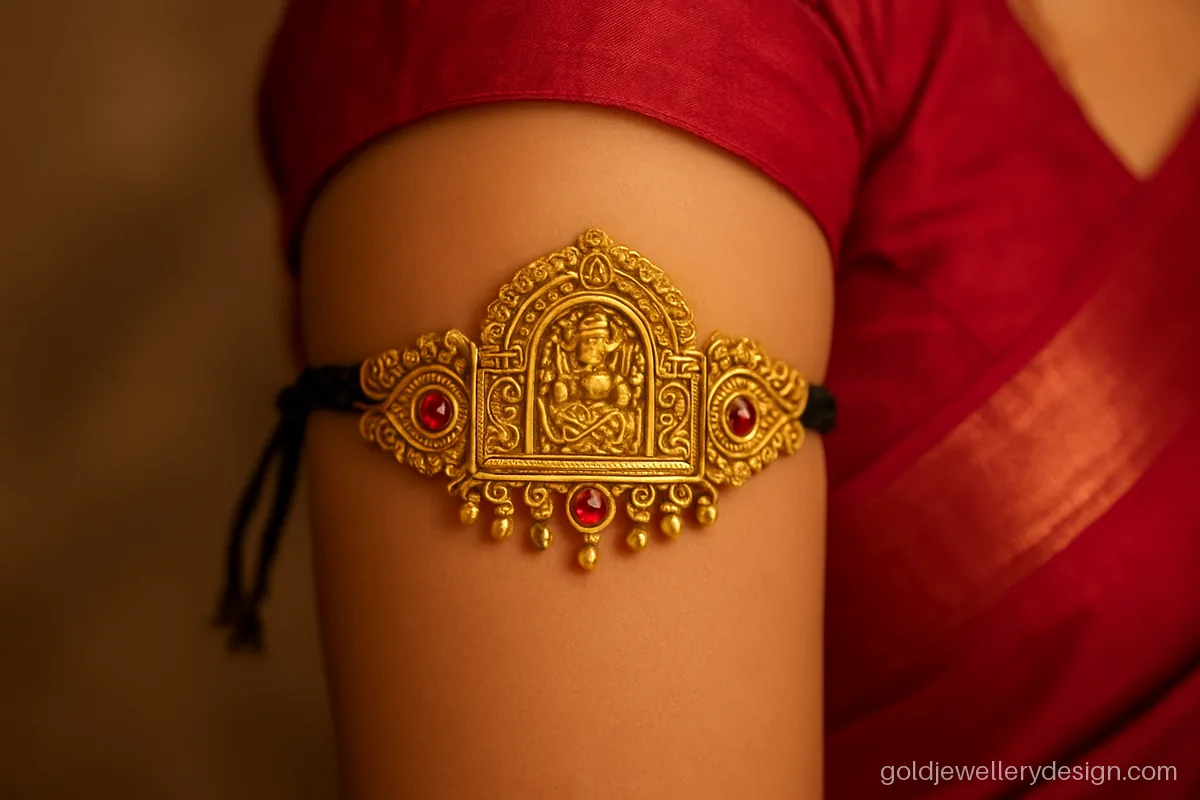
- Weight
- About 20 to 25 g
- Purity
- 22k, antique, rubies
- Wear it for
- Wedding day
A wide temple-arch centre with red stones is a style many South Indian brides wear. The dori lets it fit any arm.
Karigar noteAsk for a smooth back and strong dori loops, since the full weight hangs from two points.
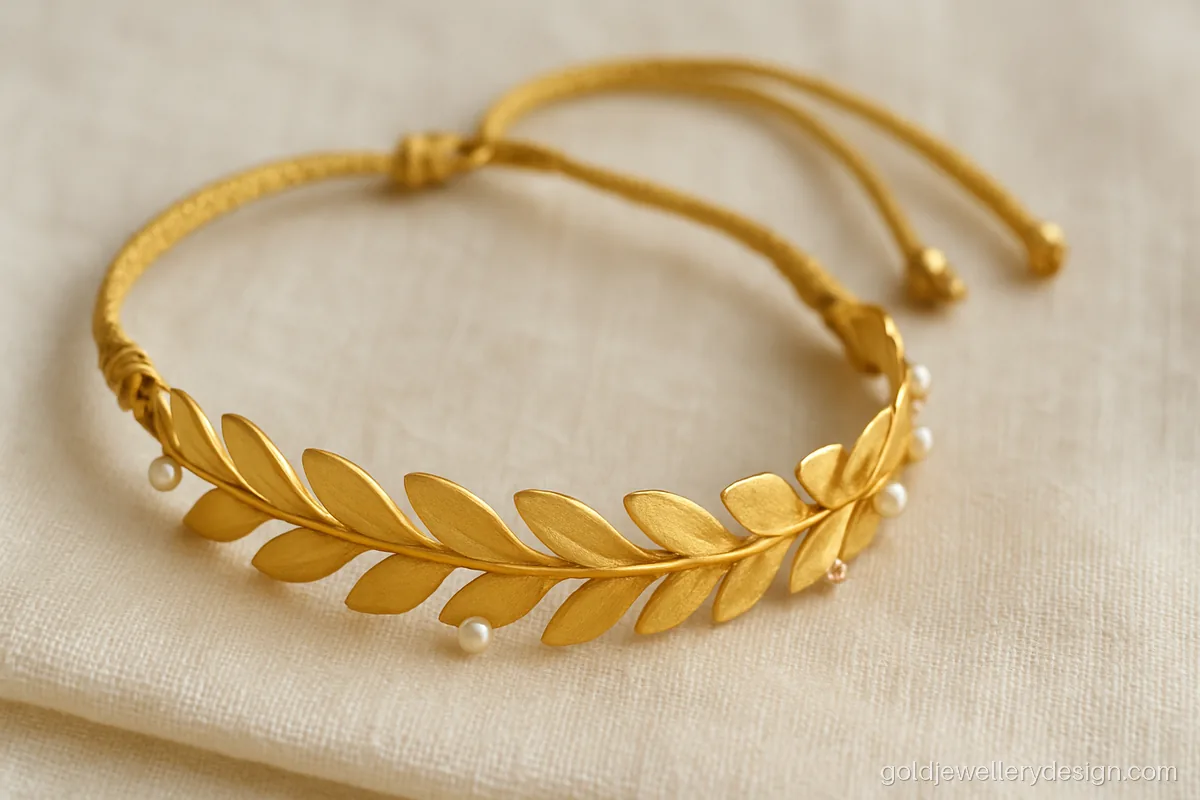
- Weight
- About 12 g
- Purity
- 22k, matte, pearls
- Wear it for
- Mehendi and sangeet
A curved band of leaves weighing under 15 grams. A good fit for mehendi or sangeet when a heavy armlet feels too much.
Karigar noteAsk for solid metal at the bend points and check that the dori slides smoothly.
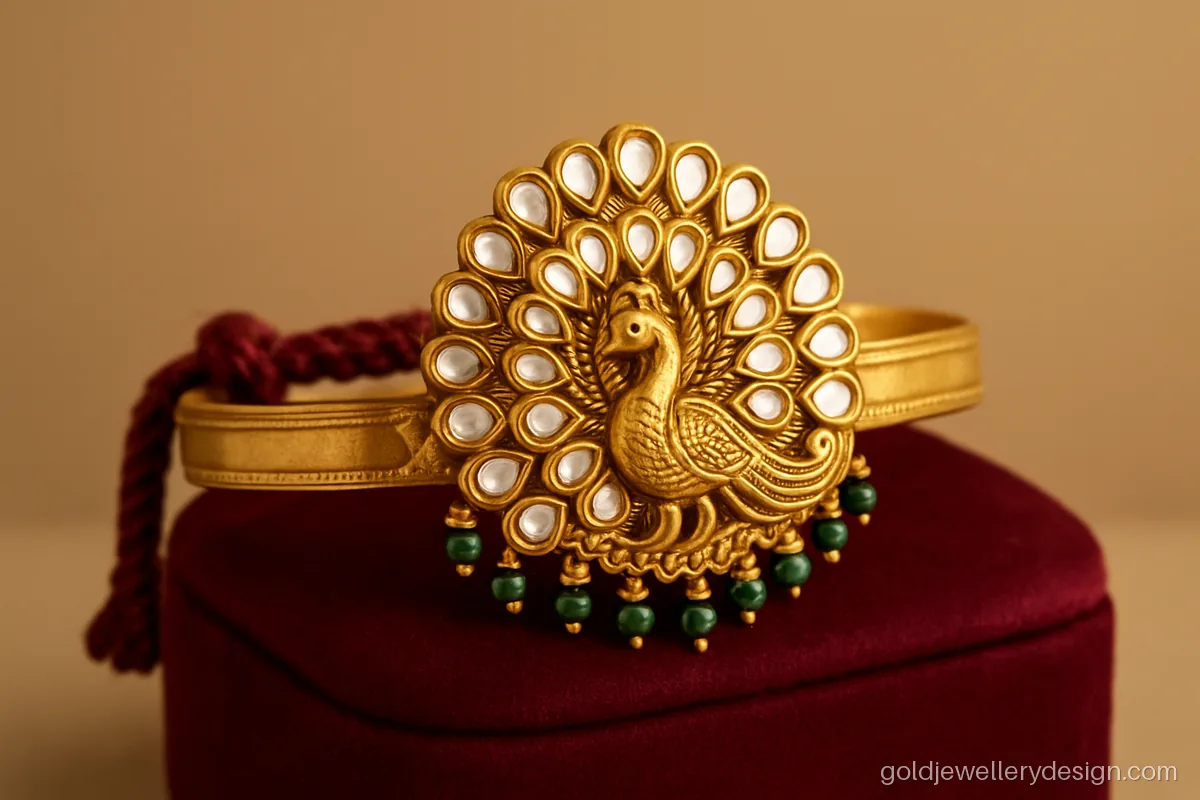
- Weight
- About 18 g
- Purity
- 22k, stone-set
- Wear it for
- Wedding and reception
A peacock with a spread tail set with flat white stones. It looks right with lehengas in jewel colours.
Karigar noteStone-set armlets hide gold under foil. Ask for net gold weight on the bill.
Hathphool Design Gold for Brides
A hathphool joins a bracelet to one or more rings with fine chains across the back of the hand. Families searching for haath phool ki design gold usually choose between a full bridal hathful design gold piece linked to all five fingers and a lighter single ring style. Any gold hathphool design should be sized finger by finger.
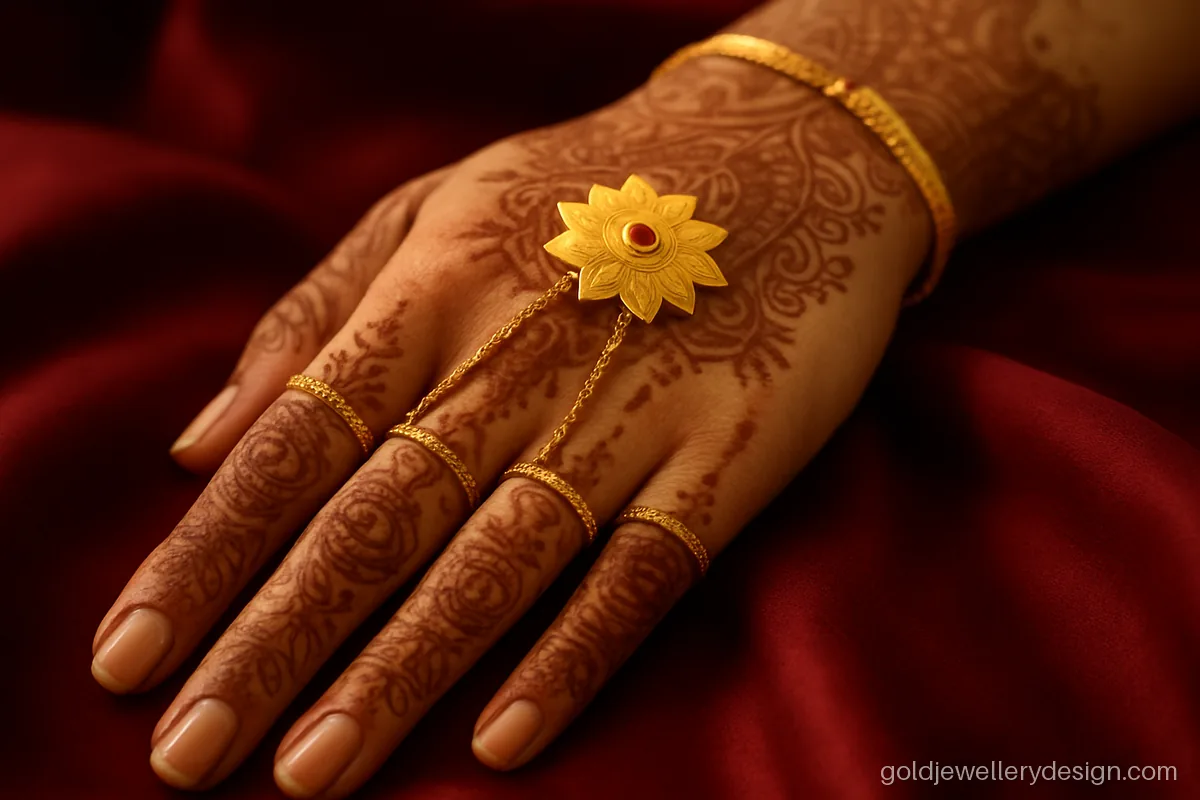
- Weight
- About 25 g
- Purity
- 22k, matte, rubies
- Wear it for
- Wedding day
A lotus on the back of the hand with chains to all five fingers. The full bridal look, best kept for the wedding and photos.
Karigar noteAsk for adjustable rings and measure each finger, since chain length decides how it sits.
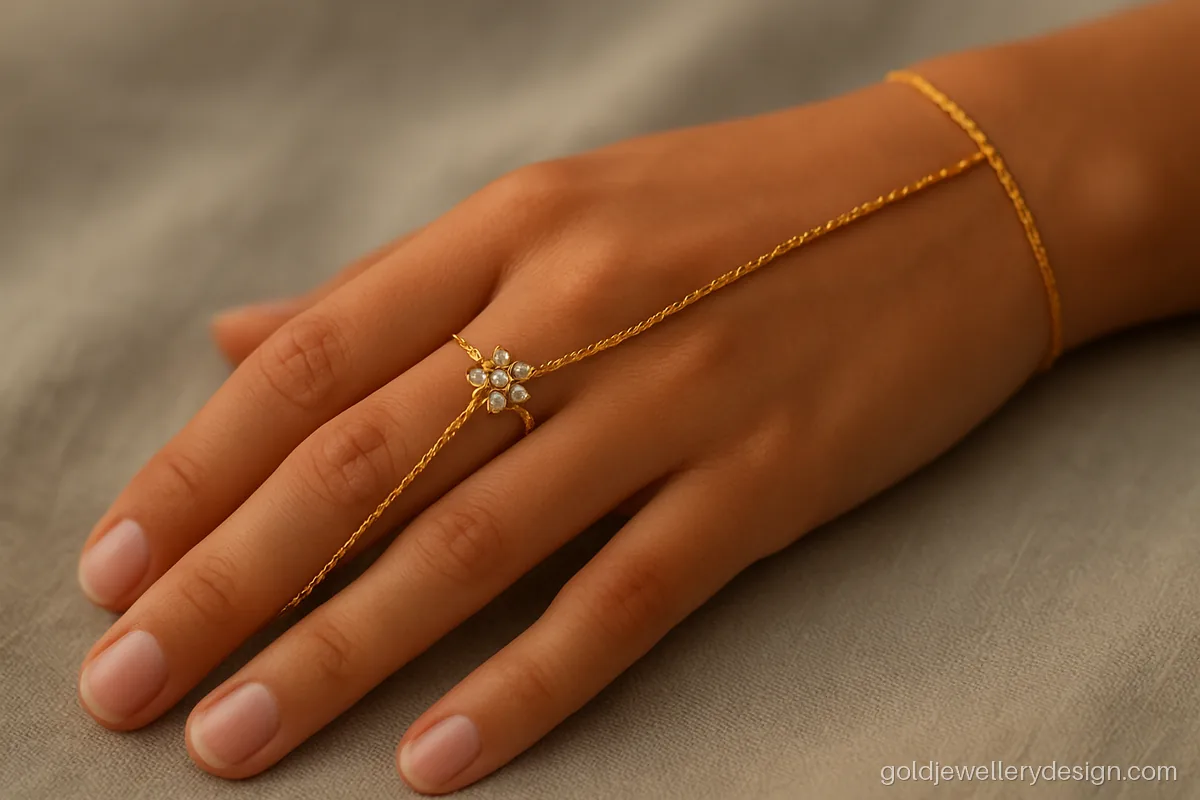
- Weight
- About 6 g
- Purity
- 18k with CZ
- Wear it for
- Receptions and parties
One ring, one chain and a small flower at the wrist. Light enough for a reception or a friend's wedding.
Karigar noteAsk for 18k for the CZ settings and a lobster clasp on the bracelet side.
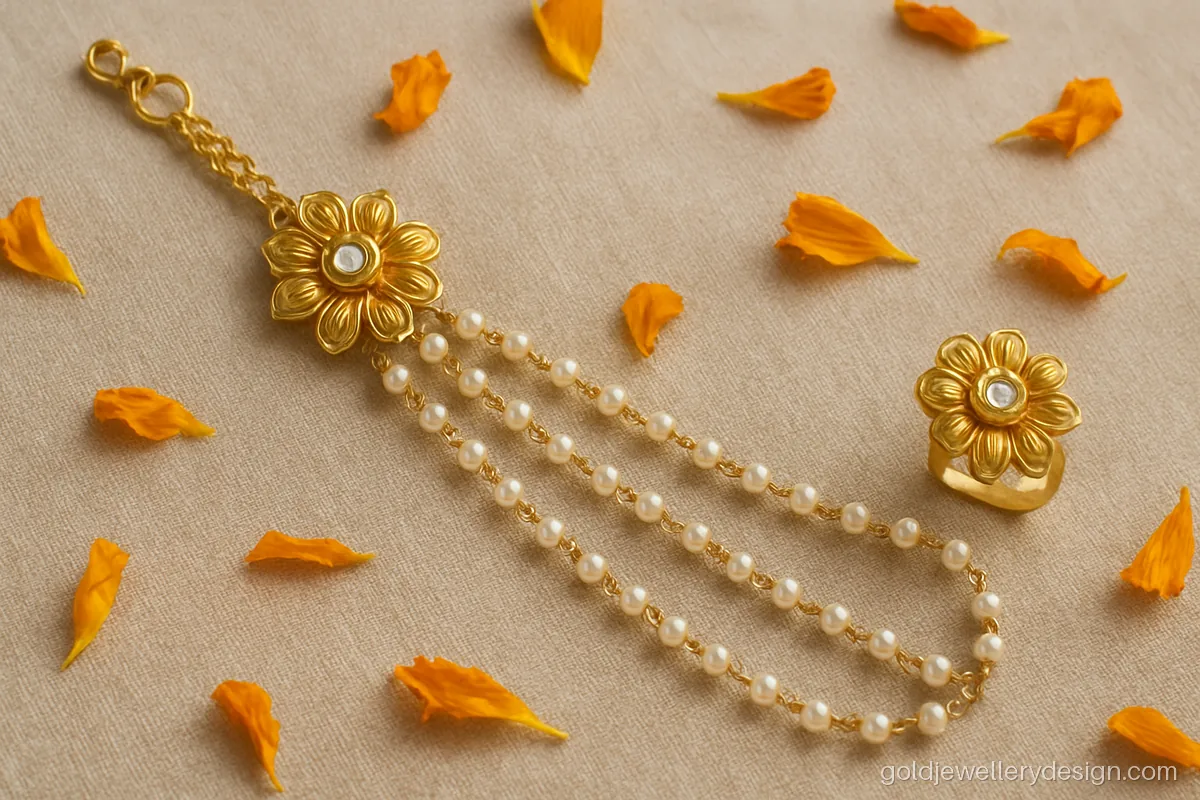
- Weight
- About 10 g gold
- Purity
- 22k with pearls
- Wear it for
- Mehendi and sangeet
Pearl strands in place of chains make the hathphool softer and gentler on mehendi hands.
Karigar noteAsk for pearls knotted on strong thread and a few spare pearls in case one breaks.
Gold Kamarband Design for the Waist
A kamarband or waist belt holds the saree pleats and gives bridal wear a grand finish. Gold kamarbands are heavy, so many families choose a lighter chain style or have gold panels fixed on a cloth belt.
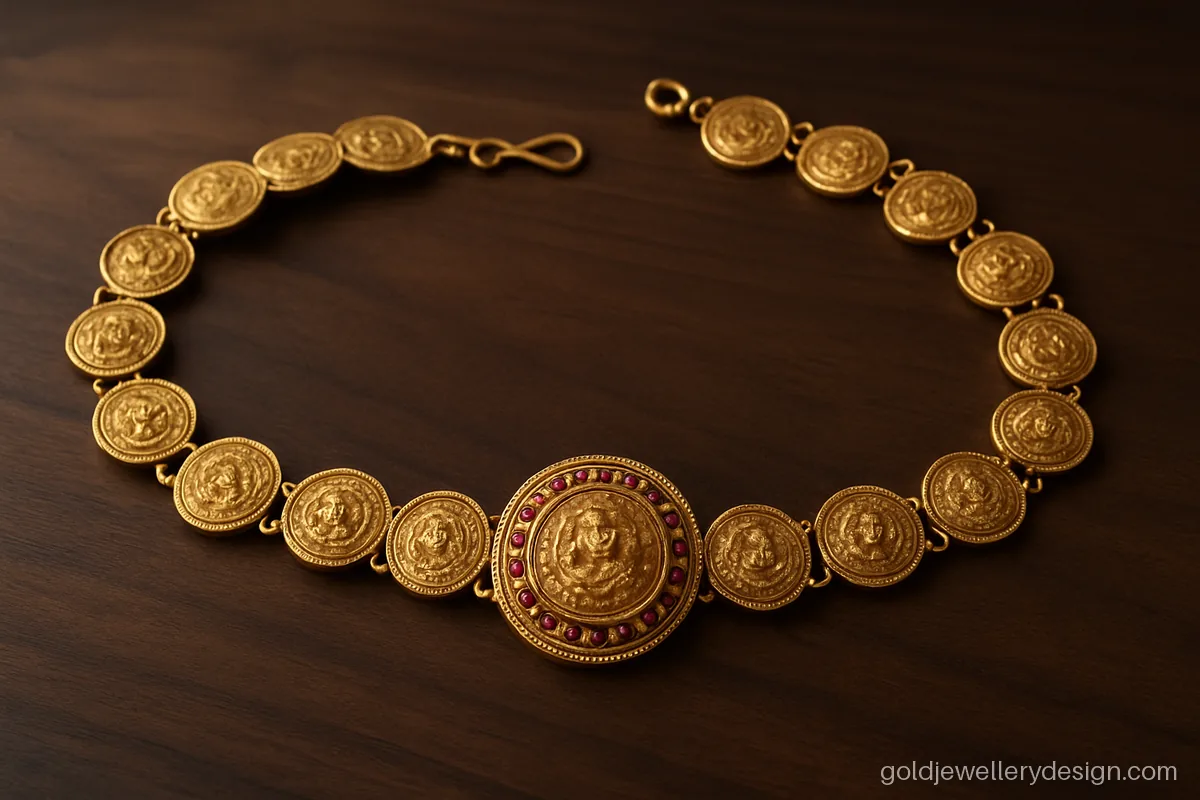
- Weight
- About 80 to 120 g
- Purity
- 22k, antique coins
- Wear it for
- Wedding day
Coin panels joined by small rings bend around the waist. A favourite at South Indian weddings and often passed down.
Karigar noteMeasure the waist over the saree, and ask for extra links so it can be resized later.
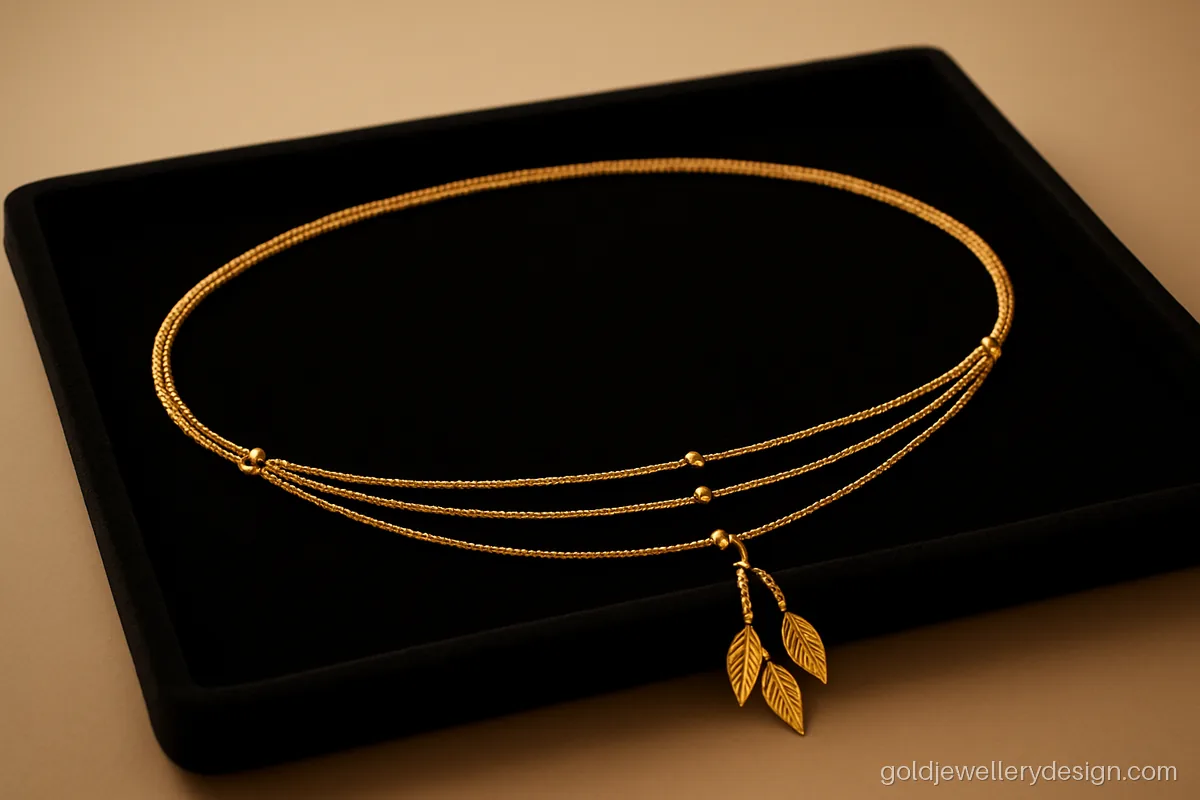
- Weight
- About 25 to 35 g
- Purity
- 22k, high polish
- Wear it for
- Sangeet and festive
Three thin chains with leaf tassels at the side. Far lighter than a panel belt and easy to adjust.
Karigar noteAsk for a hook with a safety lock and check the chains do not tangle when folded.
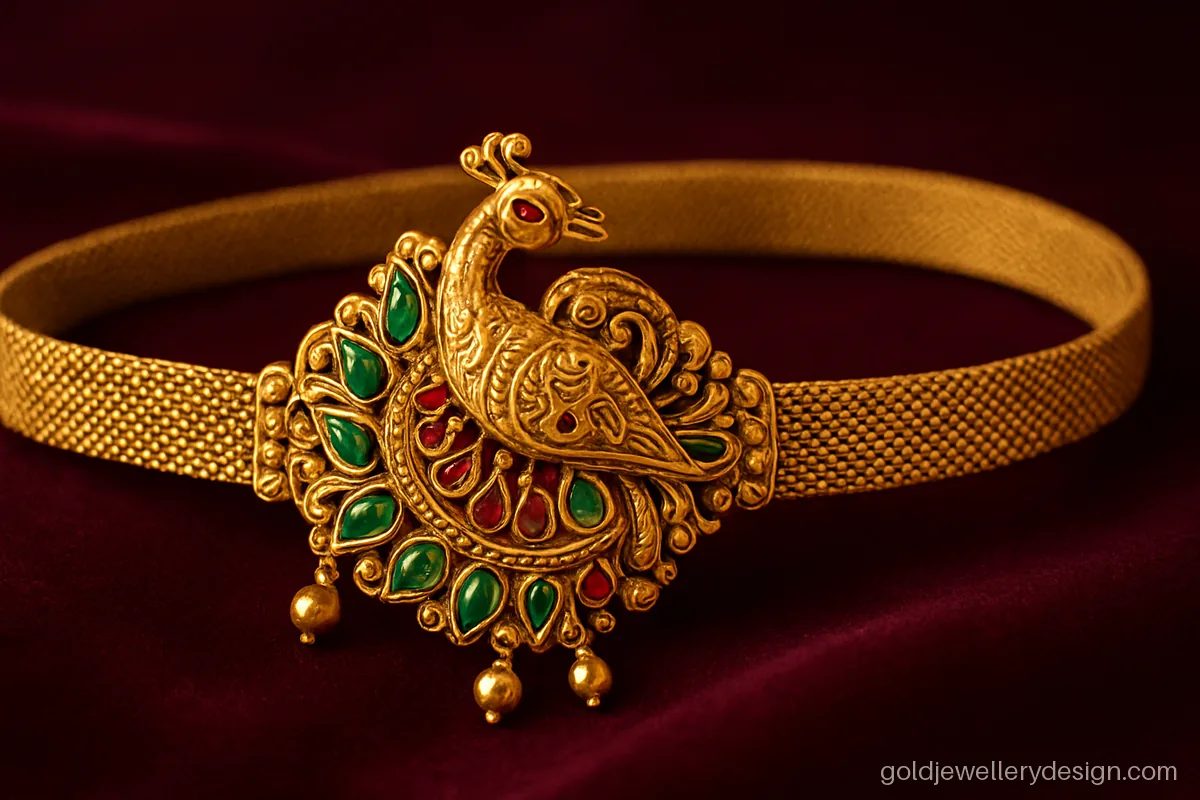
- Weight
- About 60 g
- Purity
- 22k, stones, mesh
- Wear it for
- Wedding day
A peacock buckle sits at the front while a flexible mesh wraps the waist. The green stones add colour for photos.
Karigar noteMesh is costly to repair. Ask how the clasp is fixed and get stone weight written separately.
Gold Payal Design and Anklets
Many families across North and West India wear silver payal and keep gold above the waist, while gold anklets are common in parts of South India and in some other communities. A gold payal design is a regional and family choice, so ask at home before you order.
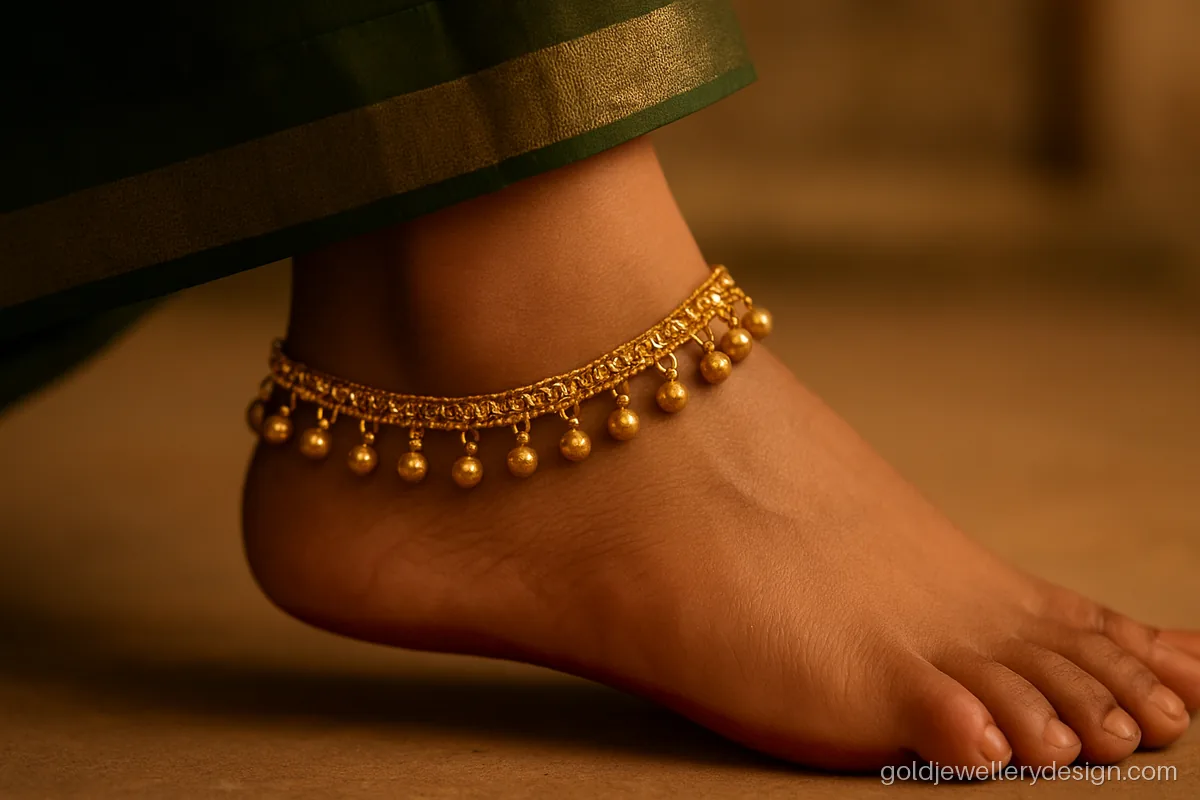
- Weight
- About 10 g pair
- Purity
- 22k, high polish
- Wear it for
- Daily and festive
Tiny bells give the soft sound many women like at home. A thin chain keeps it comfortable for daily wear.
Karigar noteAsk for bells soldered on closed loops and an extra inch of chain for adjustment.
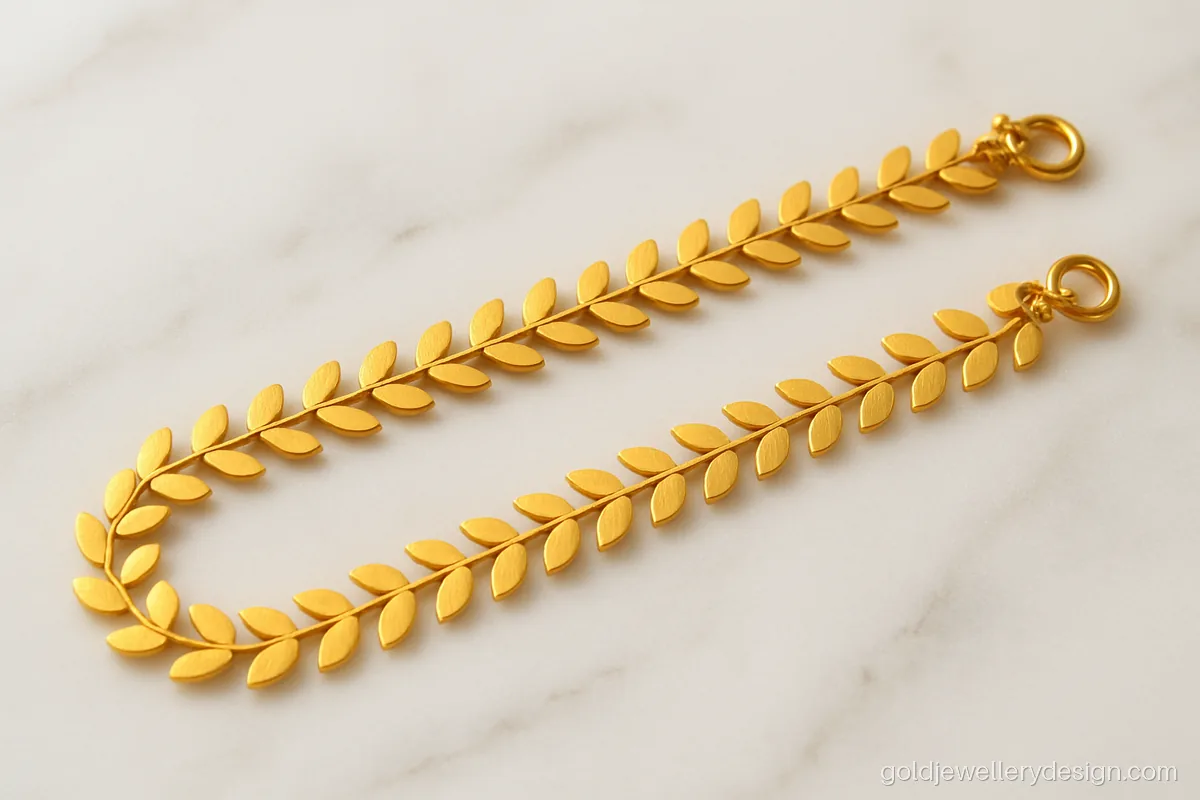
- Weight
- About 6 g pair
- Purity
- 22k, matte leaves
- Wear it for
- Daily wear
Flat leaves lie smooth against the ankle and do not catch on saree or salwar hems.
Karigar noteAsk for a spring ring clasp with a safety chain, since anklets take knocks every day.
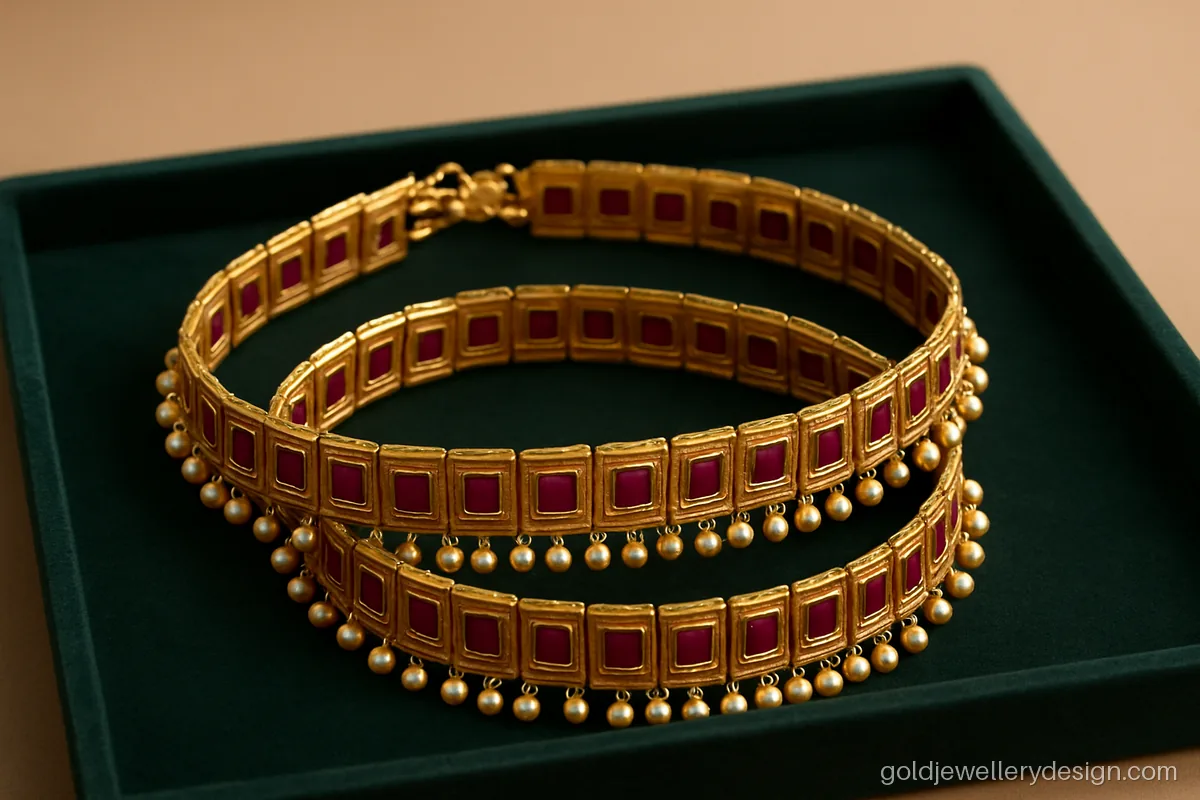
- Weight
- About 30 g pair
- Purity
- 22k, rubies, pearls
- Wear it for
- Wedding day
Wide panels with rubies and pearl drops make a grand bridal anklet. It suits families where gold payal is part of the wedding set.
Karigar noteAsk for a smooth back so it does not rub the ankle, and check pearl drops hang from closed loops.
How to Choose Bridal Arm, Hand and Waist Pieces
Fit matters more than design for these pieces, because they sit on parts of the body that move a lot.
| Piece | Where it sits | Typical gold weight | Fit tip |
|---|---|---|---|
| Bajuband | Upper arm | 10 to 30 g | Dori or screw for adjustment |
| Hathphool | Back of hand | 5 to 25 g | Measure each finger |
| Kamarband | Waist over saree | 25 to 120 g | Measure over the saree |
| Payal | Ankle | 5 to 30 g a pair | Leave room to move |
Some families also add a galsari, a word used for different neck pieces in different regions, often a short strand of gold beads. If you are ordering a galsari design gold karigars will need a photo of the exact style you mean.
What to Check Before You Order
- Check the BIS hallmark, the purity grade such as 22K916 and the 6-digit HUID on every piece.
- Get the net gold weight in writing. Dori, pearls, stones and foil should be shown on their own.
- For heavy pieces like a kamarband, ask if any part is hollow and how it can be repaired.
- Ask whether the jeweller will resize the piece later and what that costs.
- Ask about exchange value. Bridal pieces with lots of stones return less gold on exchange.
Use our gold jewellery price guide to check the bill, and see Rajputi gold jewellery and South Indian gold jewellery for regional bridal styles.
Storing Bridal Pieces Between Functions
Wrap each piece in soft cloth and keep it in its own box, so chains and pearls do not tangle. Untie dori before storing so the thread does not stretch. Keep pearls away from perfume and hair spray. Before each wedding season, check hooks, clasps and dori for wear.
Questions buyers ask
How much does a gold bajuband design weigh?
Light armlets start around 10 grams, while bridal bajuband with stones can go to 30 grams or more. The price is the the gold weight at the current rate for its karat, plus the jeweller's making charge and 3% GST.
Is it okay to wear a gold payal design?
Customs differ. Many families in North and West India wear only silver on the feet, while gold anklets are common in parts of South India. It is a family and regional choice, so ask your elders.
How do I choose a modern gold hathful design for a reception?
Go for one ring and a single fine chain in 18k, with a small stone motif. It looks neat in photos and is light enough to wear all evening.
What is a jitiya gold design?
Many mothers who keep the Jitiya fast, especially in Bihar and eastern Uttar Pradesh, wear a small gold locket on a red or yellow thread. A jitiya design in gold in Bihar is usually a small plain or leaf patterned locket. Keep it light and solid, since it is often worn for a long time.
Can a gold kamarband design be resized?
Yes, if it is made of links or panels. Ask the jeweller to give you a few extra links at the time of purchase. Mesh belts are harder to resize, so measure carefully before ordering.
Should the bajuband match the rest of my bridal set?
It helps if the finish and stone colours match, but the motifs do not have to be the same. Many brides pick a bajuband that echoes the necklace, such as a peacock or temple arch.