Bengali Gold Chik Design, Chur, Kanbala and More
A Bengali gold chik design is often the first piece people picture when they think of a Bengali bride. This gallery shows 15 original designs in the Bengali style: chik, chur, pola, shakha, noa, kanbala, noth and tikli.
Bengali gold work is known for fine carving, filigree and soft matte finishes. Many families pass these pieces down, so they are worth choosing with care. Customs vary from family to family, and these pictures are only ideas.
For other regional styles, see Rajputi gold jewellery and South Indian gold jewellery.
Bengali Gold Chik Design: Bengali Choker Design Gold
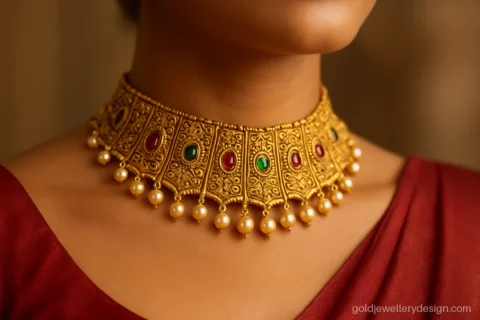
The chik is a close-fitting choker that many Bengali brides wear high on the neck, often with a longer sita haar below it. It frames the face in a way few other necklaces do. Compare it with other styles on our gold choker design page.
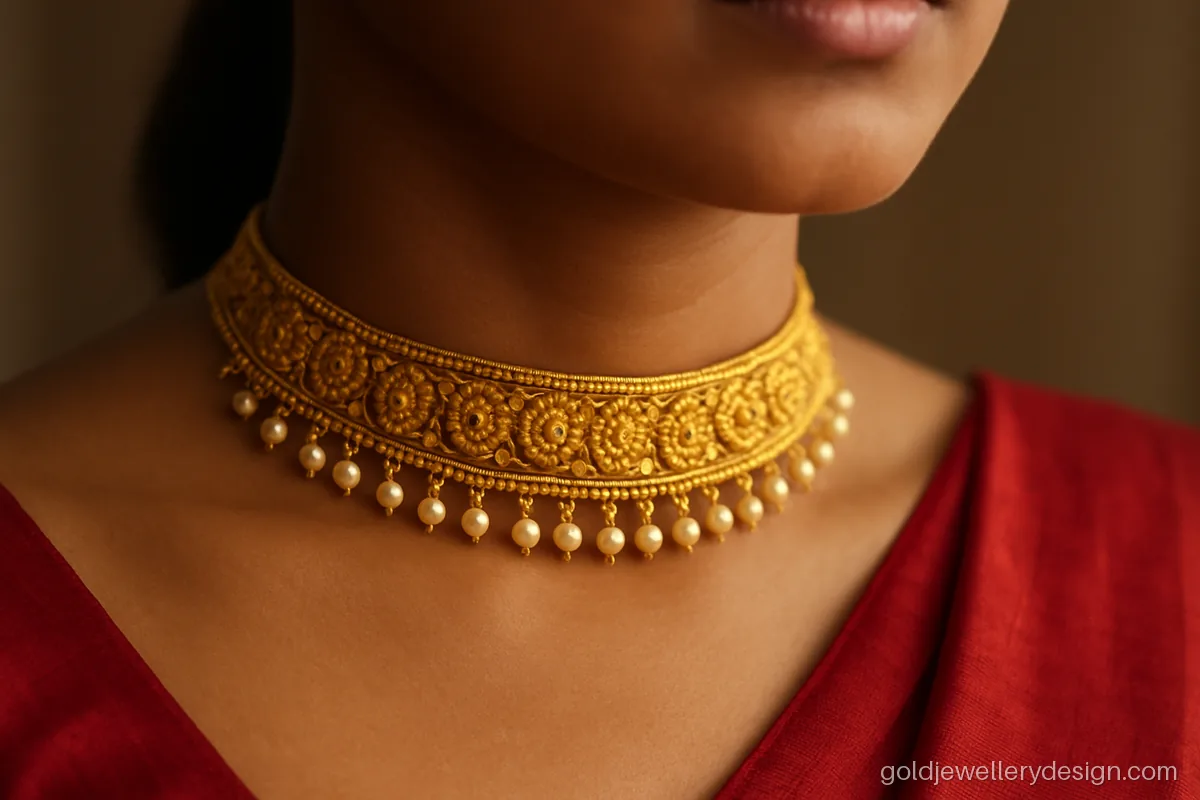
- Weight
- About 30 to 40 g
- Purity
- 22k, matte, pearl
- Wear it for
- Wedding and bou bhaat
This is the classic bridal chik: a firm carved band with tiny pearls hanging below. It sits snug on the neck and looks beautiful with a red Benarasi saree.
Karigar noteAsk for a soft adjustable dori and a slightly curved band so it does not press the throat.
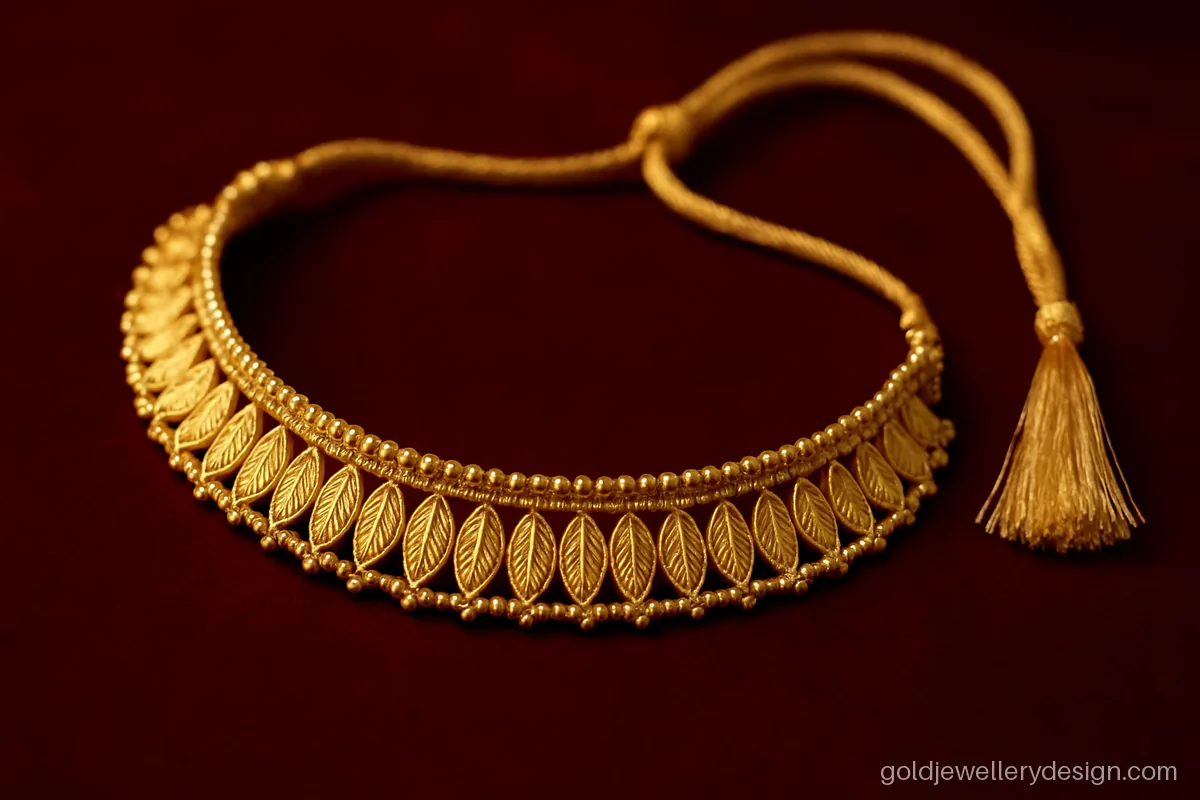
- Weight
- About 15 to 20 g
- Purity
- 22k, high polish
- Wear it for
- Pujas and festivals
Small linked leaf plates make a flexible chik that moves with the neck. It is light enough for Durga Puja visits and family dinners.
Karigar noteAsk for linked plates rather than one rigid band if you plan to wear it for many hours.
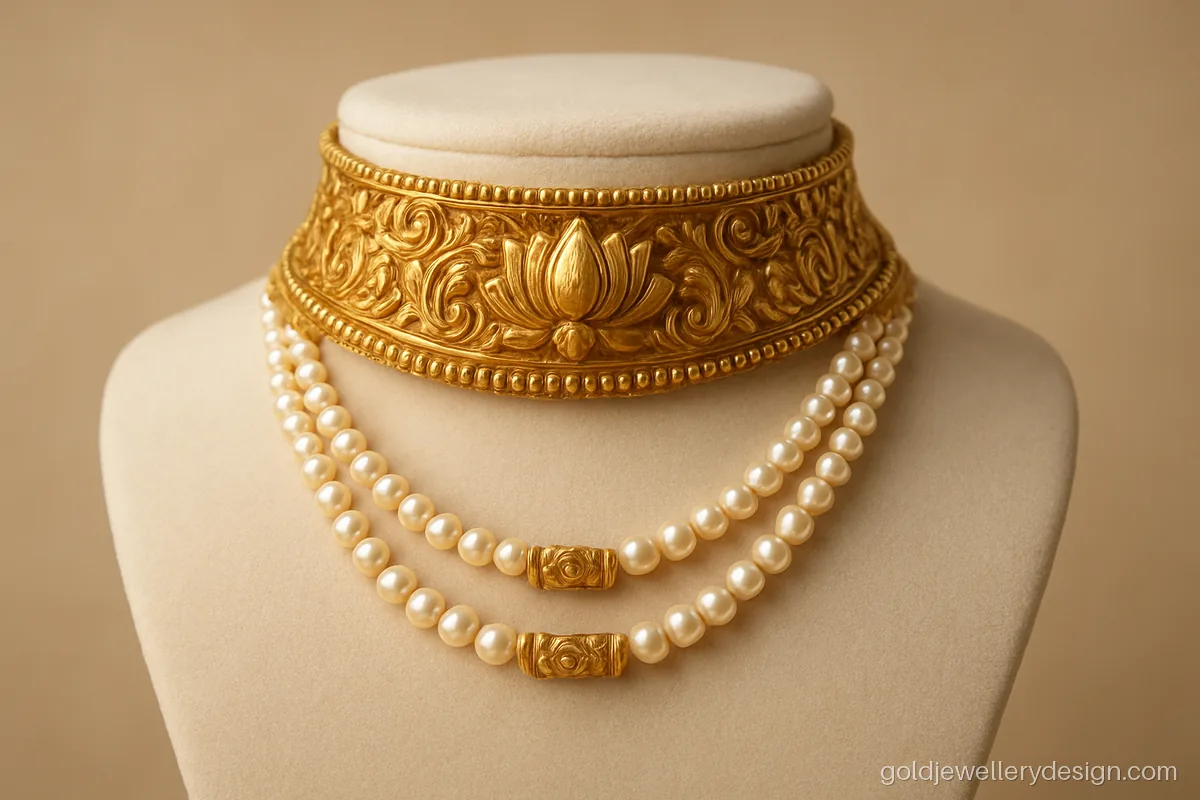
- Weight
- About 25 to 30 g gold
- Purity
- 22k, pearl strands
- Wear it for
- Weddings and events
Three strands of creamy pearls held by gold spacers sit under a small chik band. A soft, graceful choice for mothers of the bride.
Karigar noteAsk for the pearl weight on the bill and strong silk thread with knots between pearls.
Pola, Shakha and Noa with Gold Work
In many Bengali families a married woman wears a white shakha (conch shell bangle), a red pola and an iron noa. Many families now add gold caps or gold covering to these. The gold parts follow the same hallmark rules as any gold jewellery.
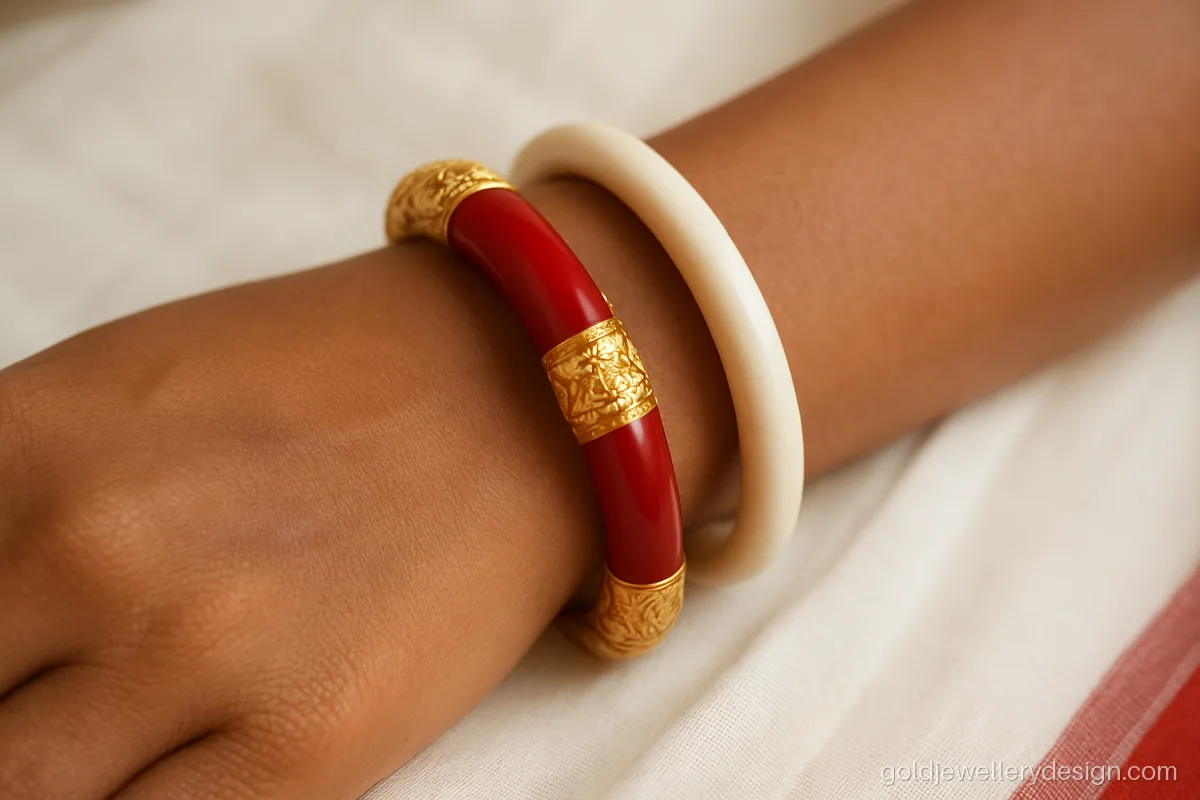
- Weight
- About 6 to 10 g gold
- Purity
- 22k, carved caps
- Wear it for
- Daily and festive
The red pola stays the star while gold caps protect its edges. Gold work also makes the pola easy to wear with festive outfits.
Karigar noteAsk for the gold weight alone, since the pola itself is not gold and must not be charged at gold rate.
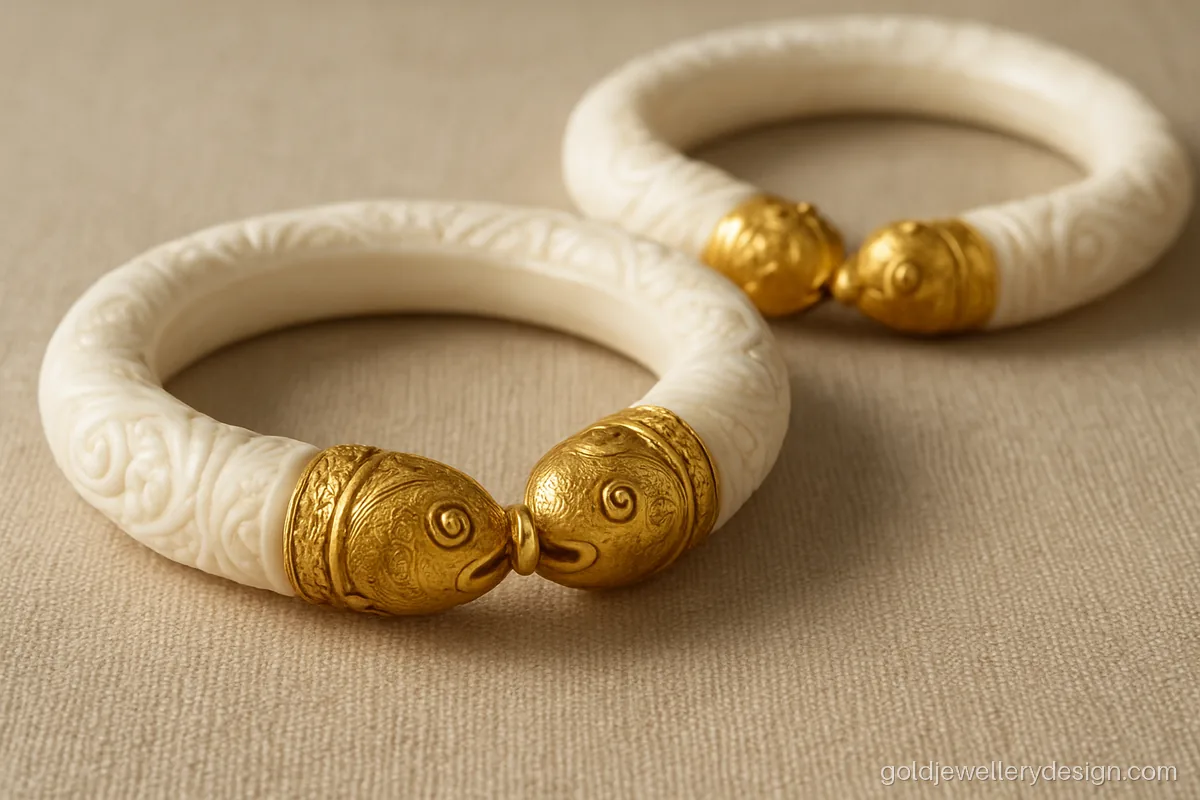
- Weight
- About 5 to 8 g gold
- Purity
- 22k, carved, shell
- Wear it for
- Wedding and daily
A white shakha with a gold mukh, or face piece, at the joint looks bright and clean. Many families gift this at the wedding.
Karigar noteCheck the gold joint is fixed with a screw, not glue, so it can be repaired later.
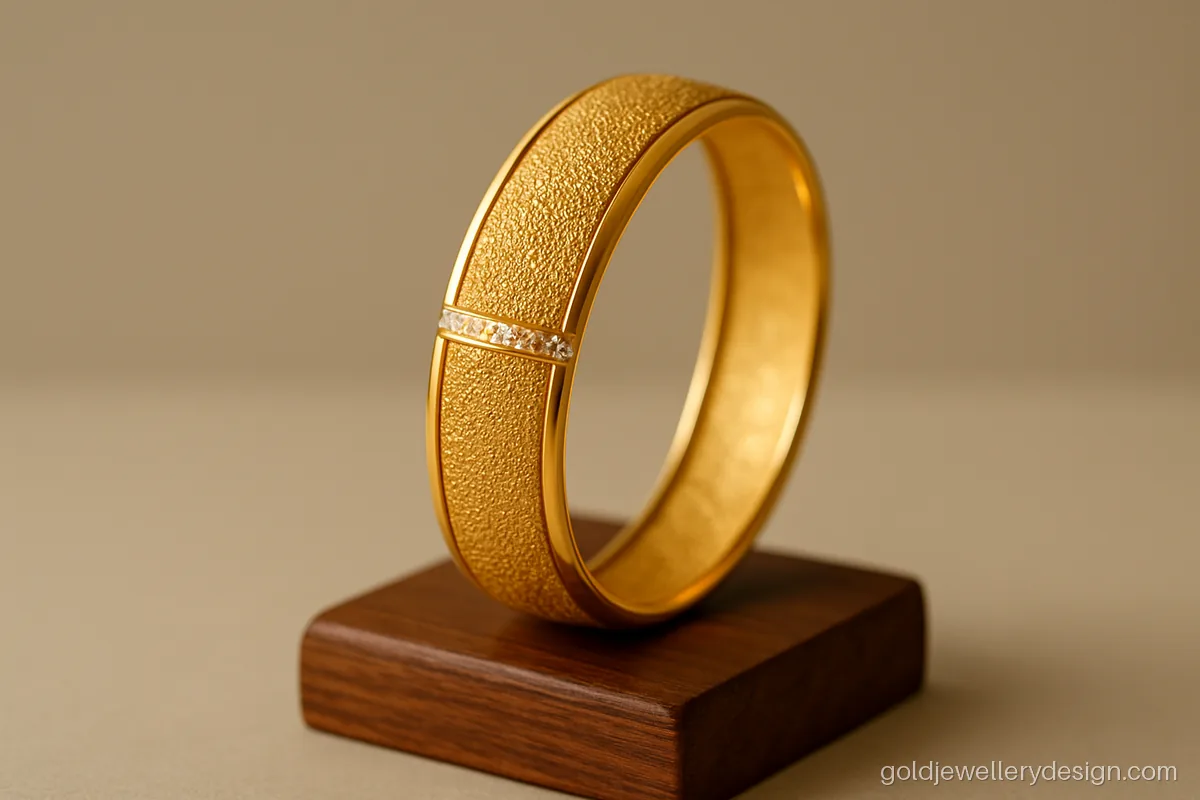
- Weight
- About 8 to 12 g gold
- Purity
- 22k, diamond-cut
- Wear it for
- Daily wear
A gold-wrapped noa looks neat and does not rust against the skin. This modern style has a thin diamond-cut band down the middle.
Karigar noteAsk how thick the gold covering is and get the gold weight listed separately from the iron core.
Gold Chur Design
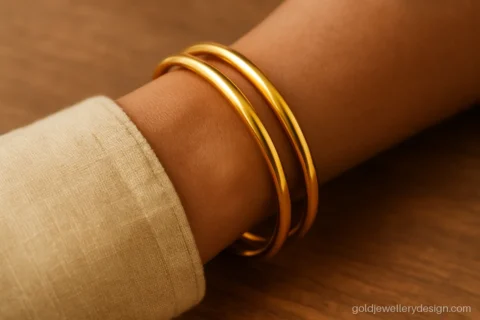
Chur are broad, solid gold bangles usually worn in pairs. A wedding gold chur design is often a gift from the bride's family. More bangle ideas are on our gold bangles design page.
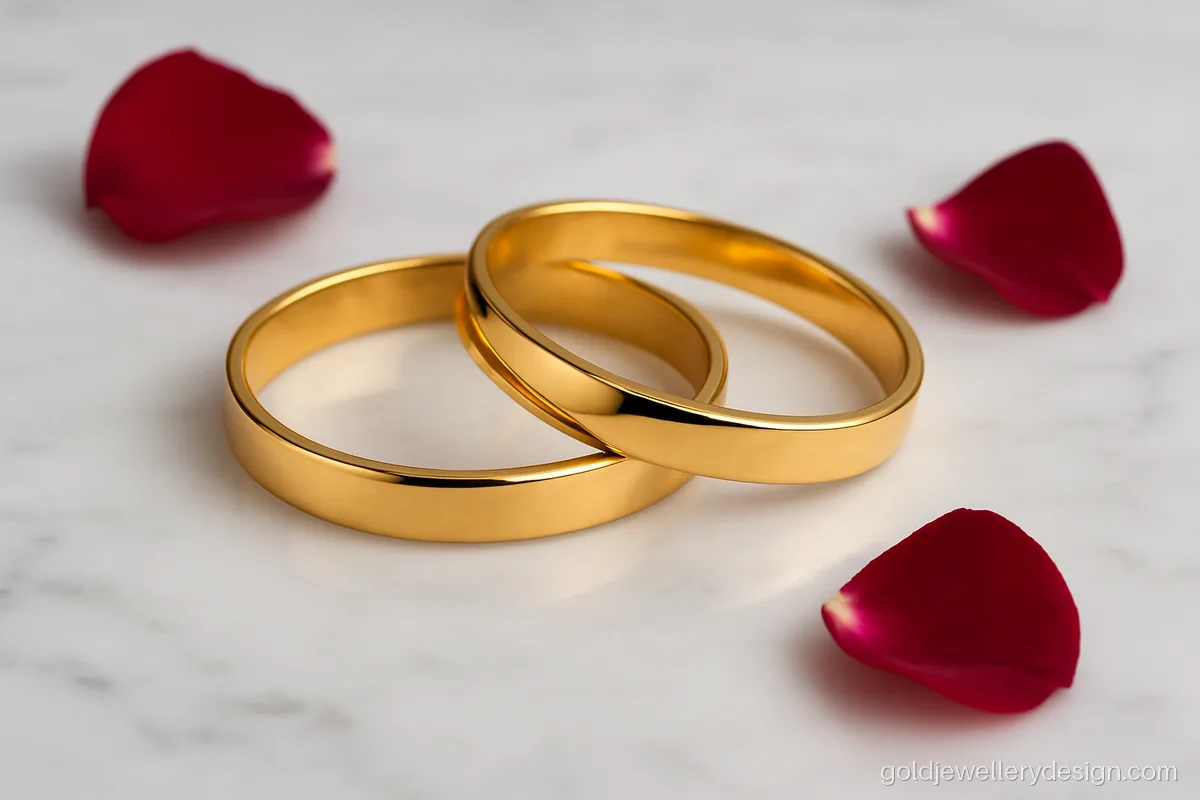
- Weight
- About 20 to 25 g each
- Purity
- 22k, high polish
- Wear it for
- Daily and weddings
A plain chur shows off the colour of 22k gold and is the easiest piece to exchange later. Many women wear one pair for years.
Karigar noteAsk for solid, not hollow, and measure your hand width so the chur slides on comfortably.
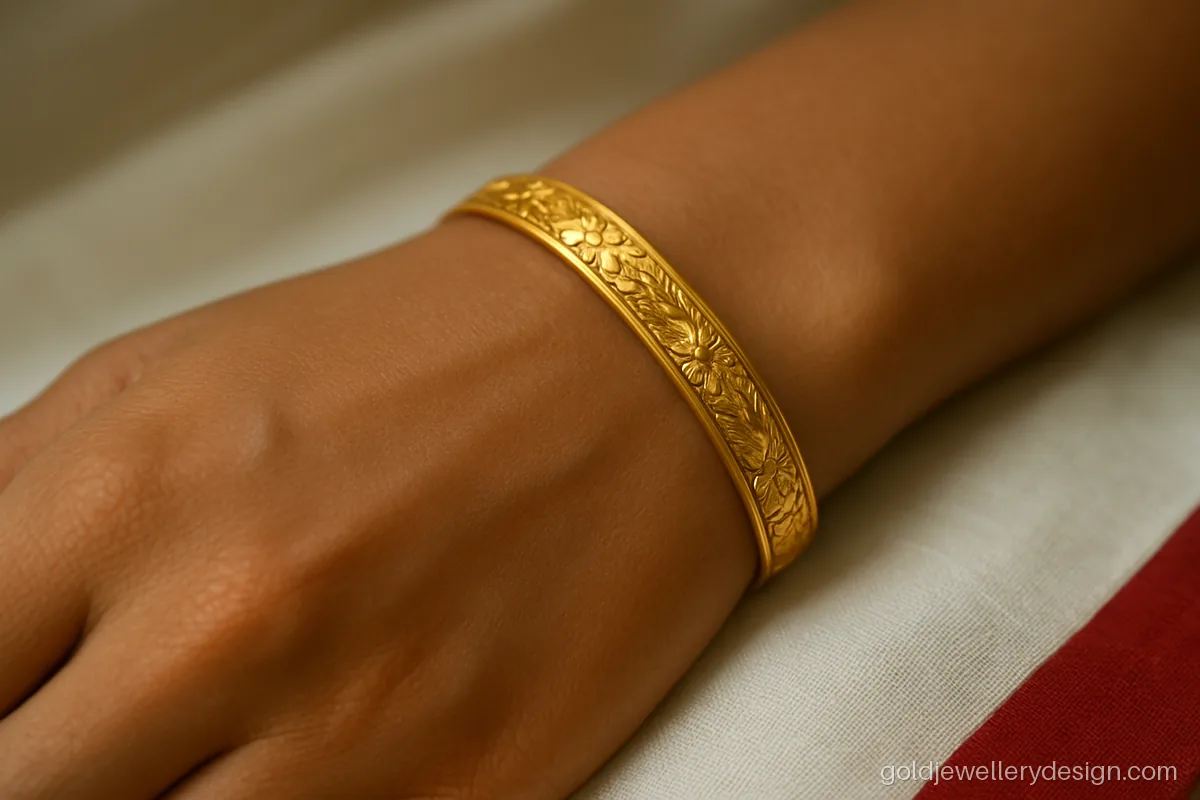
- Weight
- About 10 g each
- Purity
- 22k, engraved
- Wear it for
- Daily and gifting
A slim chur around 10 g gives the traditional look for less gold. The fine flower engraving catches the light.
Karigar noteAsk for at least 2 mm thickness so a light chur keeps its round shape.
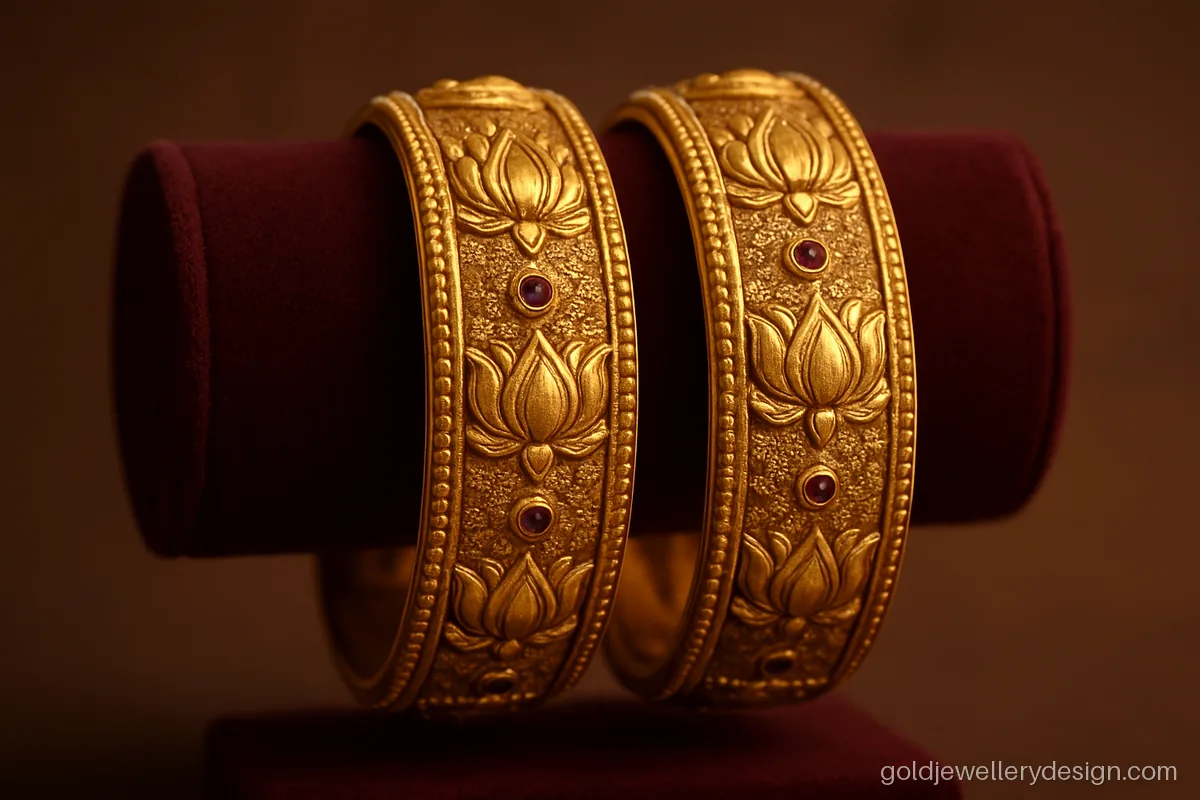
- Weight
- About 25 to 30 g each
- Purity
- 22k, carved, ruby
- Wear it for
- Wedding day
Carved lotus panels and tiny rubies give the chur a festive richness for the wedding day. They pair well with the red pola.
Karigar noteAsk for the screw or hinge to be hidden, and check every ruby dot is closed-set.
Gold Kanbala Design
Kanbala is a Bengali ear ornament that curves along the outer edge of the ear. Many have a small chain that hooks into the hair for support. For other ear styles, see our gold earrings design gallery.
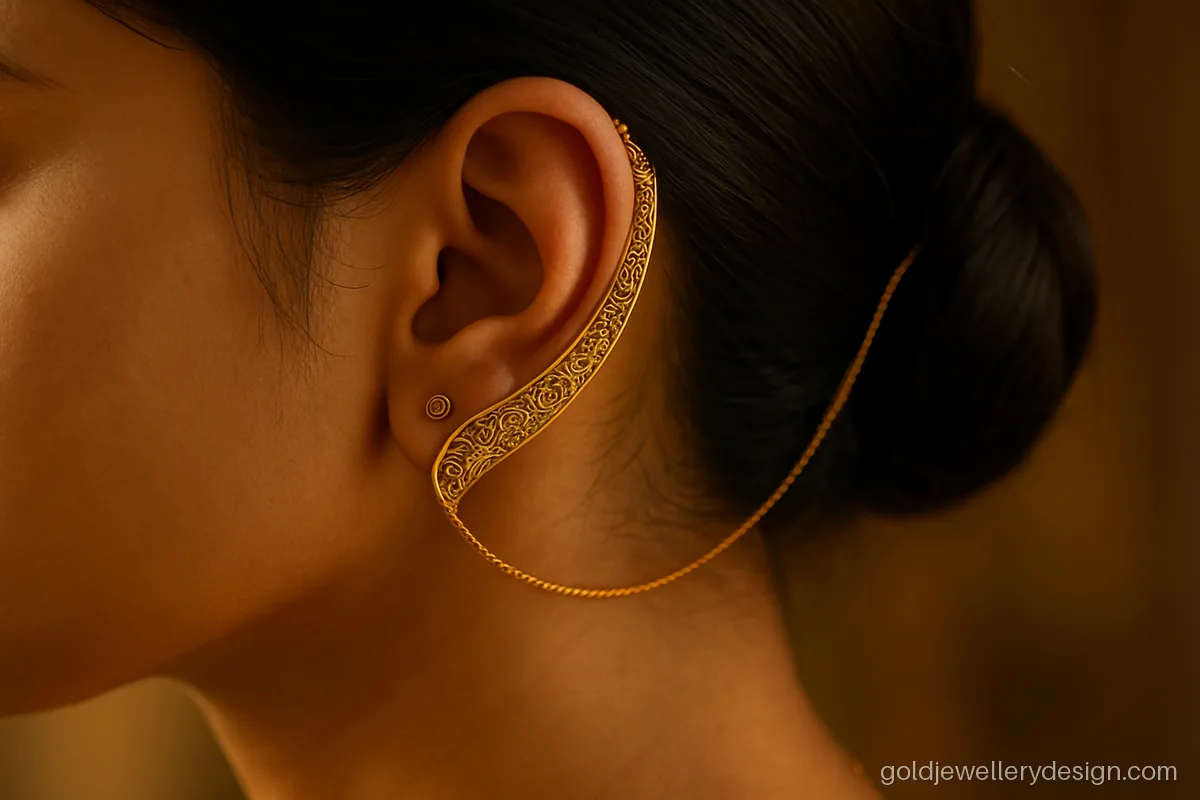
- Weight
- About 10 to 14 g pair
- Purity
- 22k, matte, filigree
- Wear it for
- Wedding and reception
The curved piece follows the ear and the chain takes weight off the lobe. A bride can wear this through long ceremonies comfortably.
Karigar noteAsk the karigar to shape the curve to your ear, and check the hair hook has a firm clip.
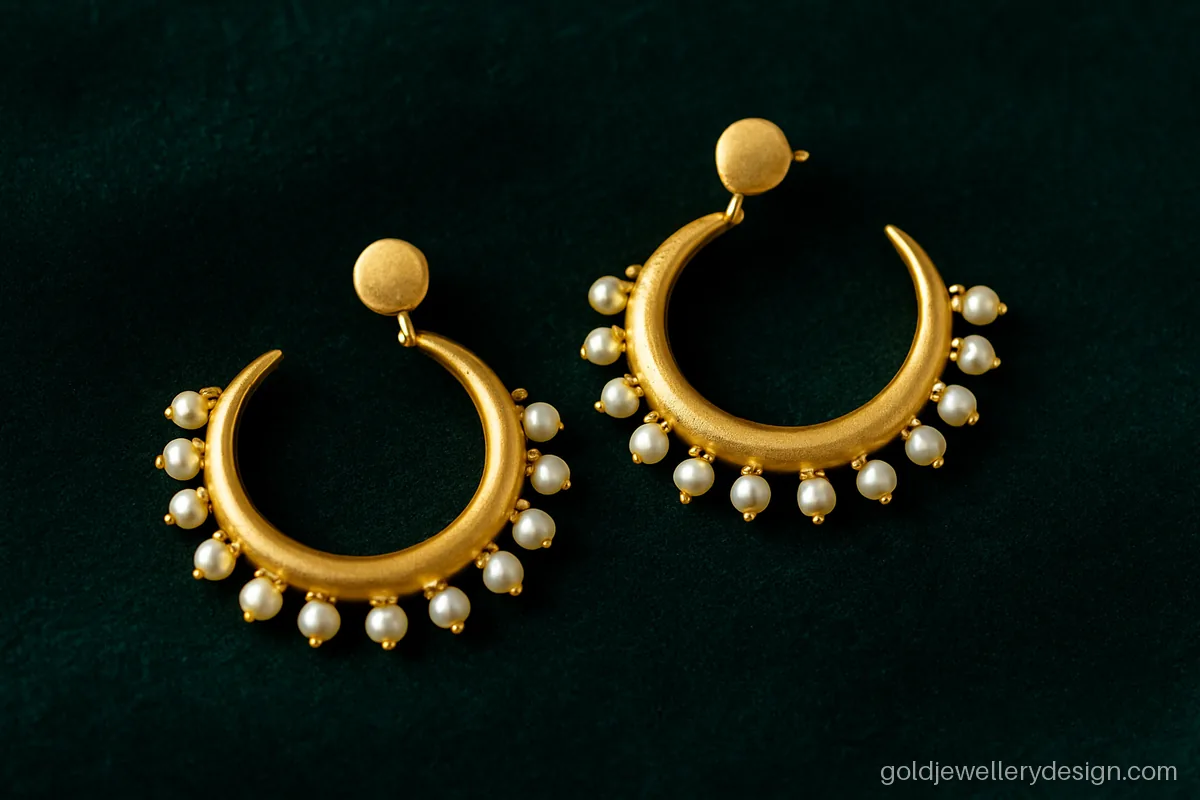
- Weight
- About 6 to 8 g pair
- Purity
- 22k, pearl
- Wear it for
- Pujas and functions
Small pearls swing along the edge of a slim kanbala. It is lighter than bridal styles and fits Puja and family events.
Karigar noteAsk for the pearls to be capped and the ear curve fitted before final polish.
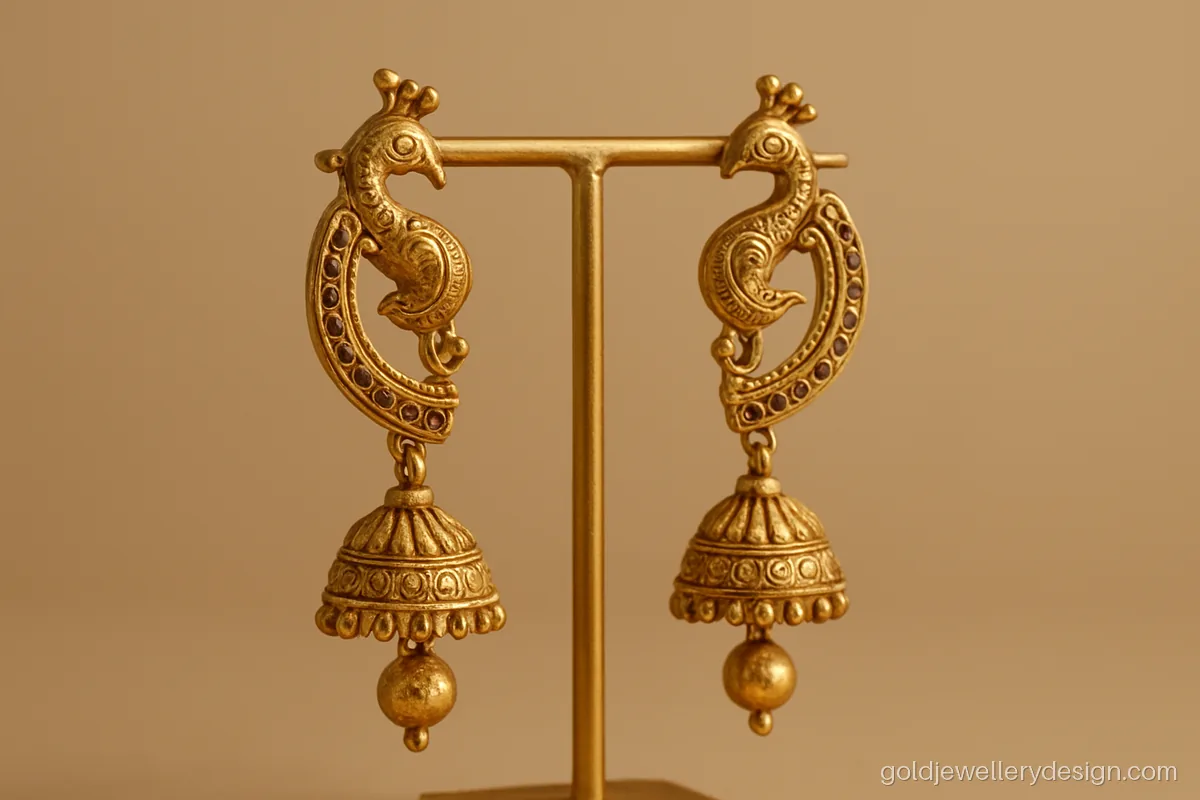
- Weight
- About 12 to 15 g pair
- Purity
- 22k, antique finish
- Wear it for
- Weddings and festivals
A peacock at the top of the ear and a jhumka at the lobe make a full ear look. Good for those who want drama with balance.
Karigar noteAsk for a screw back at the lobe and a separate clip at the top for even support.
Bengali Gold Nose Ring Design and Gold Tikli Design
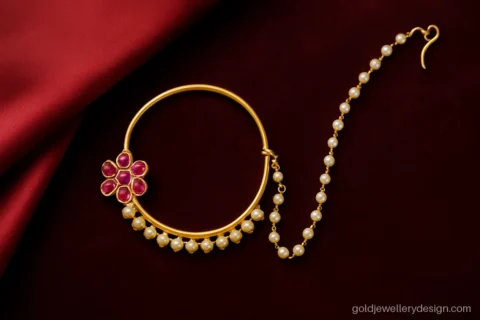
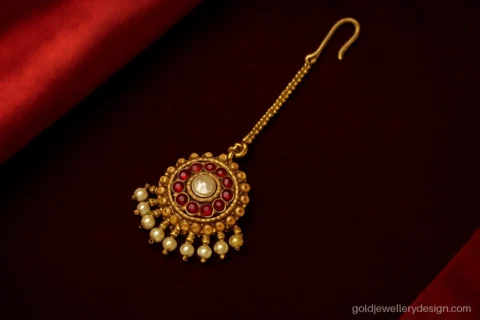
The Bengali nath, or noth, is often large and round with a chain to the hair. The tikli is a forehead ornament worn at the parting. See more on our gold nath design and maang tikka pages.
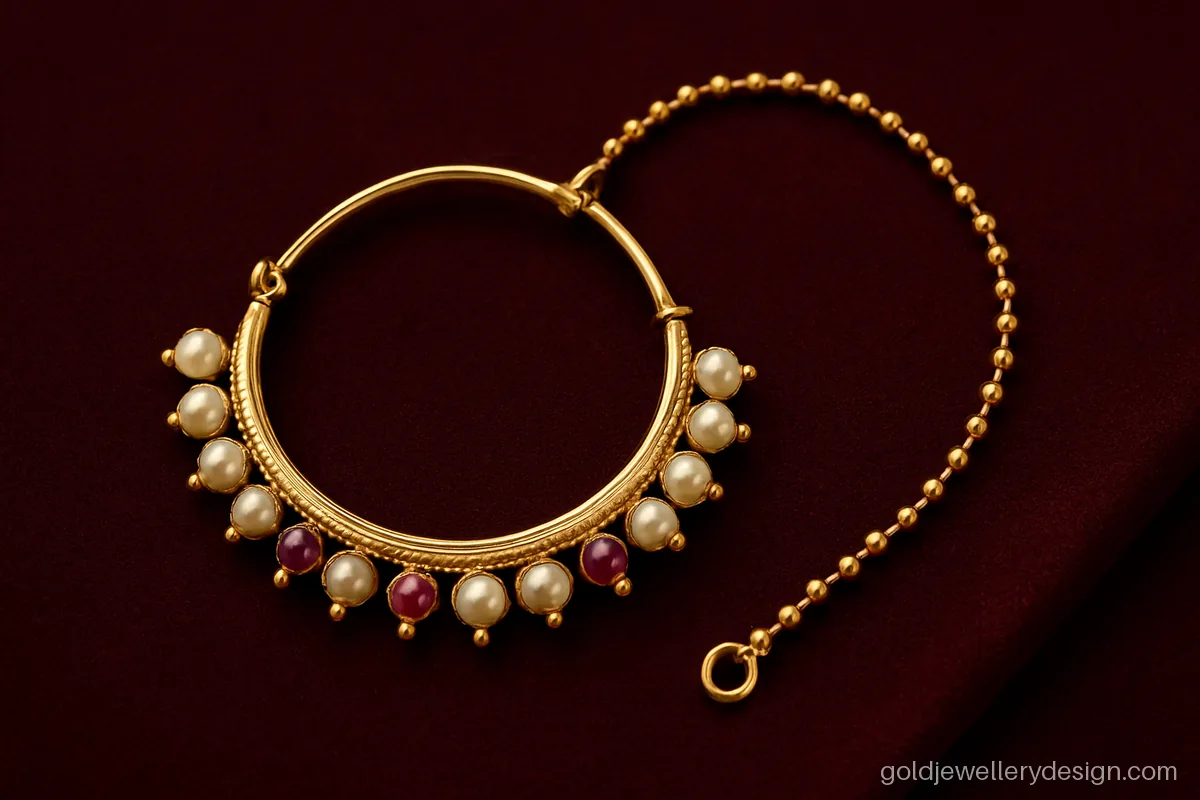
- Weight
- About 4 to 6 g
- Purity
- 22k, pearl and ruby
- Wear it for
- Wedding day
A wide round noth with pearl and ruby beads is a key part of many Bengali bridal looks. The chain links it to the hair so it does not pull the nose.
Karigar noteAsk for a thin, smooth wire for the nose and a hook-on chain that can be removed after the ceremony.
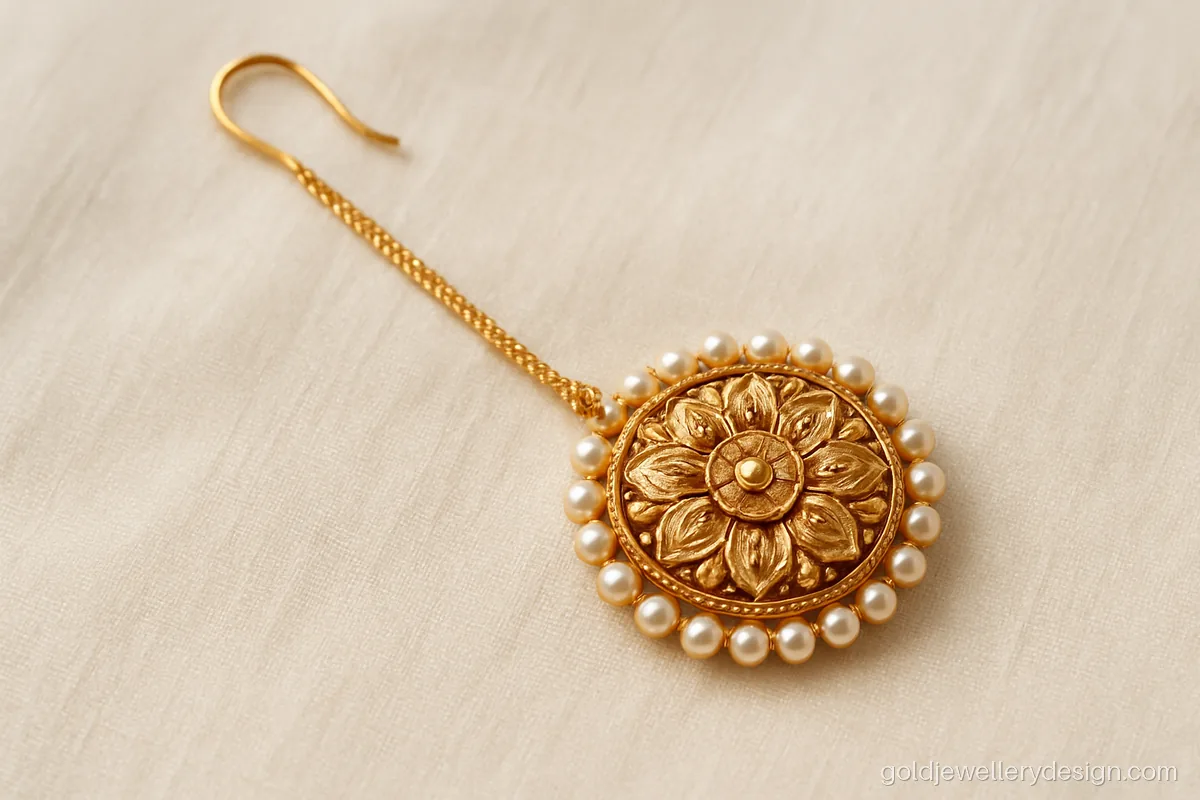
- Weight
- About 5 to 7 g
- Purity
- 22k, matte, pearl
- Wear it for
- Wedding and pujas
A round carved disc with pearls sits at the centre of the forehead. The chain runs along the parting for a neat line.
Karigar noteAsk for a hair hook at the end of the chain and check the disc lies flat.
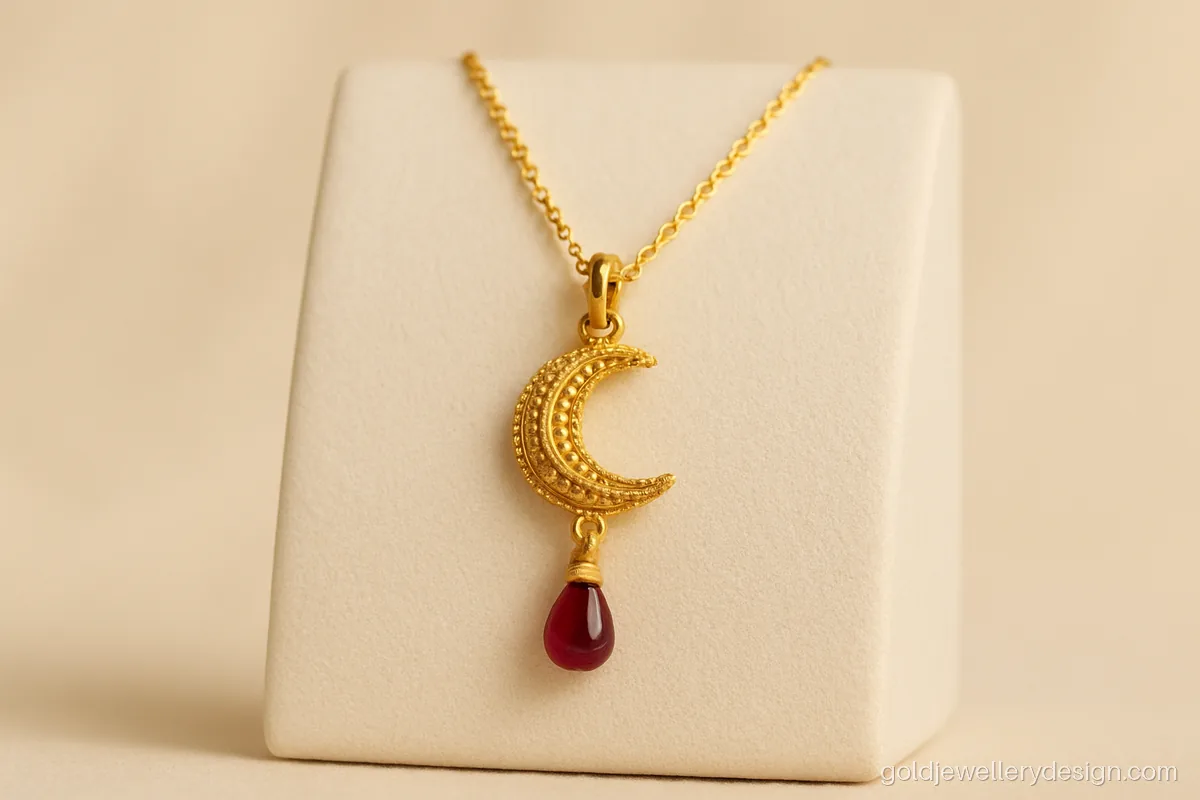
- Weight
- About 3 to 4 g
- Purity
- 22k, ruby
- Wear it for
- Engagement and pujas
A small crescent tikli with one ruby suits engagement and Puja days. It is light and easy to pin in place.
Karigar noteAsk for a shorter chain if you have a centre parting with less hair to hold the hook.
How to Choose Bengali Bridal Gold
A Bengali bridal set is often built over time. Many families start with the chur and noa, then add the chik, kanbala and tikli.
| Piece | Where it is worn | Rough weight |
|---|---|---|
| Chik | Close on the neck | About 15 to 40 g |
| Chur | Wrists, in pairs | About 10 to 30 g each |
| Kanbala | Along the outer ear | About 6 to 15 g pair |
| Noth | Nose, with a hair chain | About 3 to 6 g |
| Tikli | Forehead, on the parting | About 3 to 7 g |
Weights are guides only. Filigree and hollow work bring weight down. Heavy carving and stones bring it up.
What to Check When Buying
- Every gold piece should carry the BIS hallmark, purity like 22K916 and a 6-digit HUID.
- For pola, shakha and noa, only the gold part is charged at the gold rate. Ask for the gold weight alone on the bill.
- Price is grams times the rate for that karat on the day you buy, with making charges and 3% GST added. See the price guide.
- Fine filigree and carving often carry higher making charges. Compare a few shops.
Keep shakha away from hot water and soap, since shell can crack. Wipe gold parts with a soft dry cloth.
Questions buyers ask
What is a chik in Bengali jewellery?
A chik is a close-fitting choker worn high on the neck. Many Bengali brides wear it with a longer haar below. It can be a rigid carved band or flexible linked plates.
Is a simple gold chik design good for daily wear?
A light linked chik of about 15 g can be worn often, but most people keep it for pujas and functions. For daily use, a thin chain is more comfortable. Choose linked plates so it bends with the neck.
How heavy is a 10 gram gold chur?
A 10 g chur is a slim band, usually about 5 to 7 mm wide. It keeps the traditional look for less gold. Ask for enough thickness so it does not bend out of shape.
What is the difference between pola, shakha and noa?
Shakha is a white conch shell bangle, pola is a red bangle made of coral or lac, and noa is an iron bangle. In many Bengali families married women wear them together. Gold caps or covering are added for beauty and protection.
Is the gold sankha design charged fully at gold rate?
No. Only the gold part should be charged at the gold rate. The shell is not gold, so ask the jeweller to write the gold weight separately on the bill.
What is a kanbala and how is it worn?
A kanbala is an ear ornament that curves along the outer edge of the ear. It is held by a stud at the lobe and often a chain or clip in the hair. It gives a full, bridal look without pulling the lobe.